


David Toschach, 7th of Monzievaird, led a party of 25 emigrants to East New Jersey in 1685 and set up a fur trading post in New York.
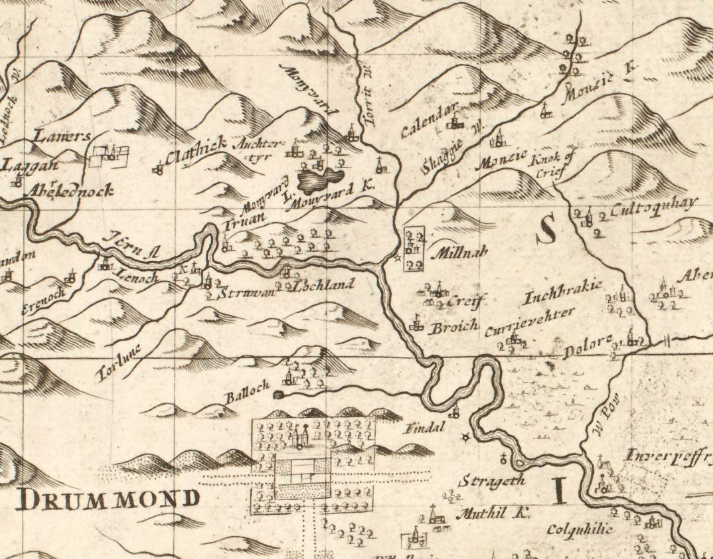
David Toschach [or Tosheoch] was born around 1645 in the parish of Monzievaird and Strowan, Perthshire into a minor landed family. He was the son of Andrew Tosheoch, 6th of Monzievaird, and Catherine Campbell, the daughter of Sir Robert Campbell of Glenorchy and Isabel Macintosh.
His family were burdened financially, dating back to his grandfather David’s decision in 1615 to mortgage their lands. Three years later this David was killed in Perth by Laurence Bruce of Cultnamundie and others, a consequence of a feud. The Tosheoch family petitioned the Privy Council for compensation, but this was not forthcoming until Bruce returned from exile 18 years later and only able to pay a small part of his original penalty. The next laird, Andrew was a Royalist whose lands were sequestered by Parliament in the 1650s though he gained political favour under King Charles II being appointed a Justice of the Peace in 1660 before dying in 1665.
David became 7th of Monzievaird when, in 1668, he inherited his father’s lands and the family debts. Matters came to a head when in 1674, he and his mother were pursued by John Graham of Balgowan for fulfilment of a heritable bond of 5,000 merks, annual interest of 300 merks, from the town and lands of Meckven. In the same year he also had money due to him arrested to pay another creditor, Francis Stewart.
Monzievaird was a supporter of his first cousin, Sir John Campbell of Glenorchy in his dispute with George Sinclair of Keiss over the earldom of Caithness, and took part in the Battle of Altimarlach on 13 July 1680 which took place near Wick in Caithness – the last clan battle in Scotland. In August 1683 Monzievaird was amongst those granted clemency for this by King Charles II. This group also included Captain Patrick McGregorie who was married to his sister Margaret.
The move to East Jersey
In March 1684, he purchased a quarter of the share of East New Jersey held by James, Earl of Perth, for £250, thus becoming one of the so-called ‘fractioners’. He was also listed as one of 29 agents in a pamphlet published in 1684 to attract tradesmen and farm servants to join the colonial venture. He led a party of emigrants including his wife Jean Campbell, the McGregories and their children, and about 15 others who sailed for East Jersey aboard the Shield of Stockton in July 1684. He also contracted with the Privy Council to carry three thieves from Stirling Tolbooth. The ship arrived at the Patuxent River in Maryland on 29 September and the passengers had to travel 100 miles overland or by coastal craft to Perth Amboy.
Monzievaird was quickly disillusioned with his situation in East Jersey. He failed to obtain the specific area of land he wanted and wrote to the Earl of Perth in March 1685 asking for his money back. He complained of being treated badly by the “chifts and cheats” of Quakers. Knowledge of this letter led the Board of Proprietors to prepare a rebuttal.
Monzievaird was very conscious of his first-born social status – in contrast to the younger sons of landed gentry amongst the emigrants – and he appears in the New Jersey records as ‘The Laird of Minivaird’. He may have had misplaced illusions about his likely life in East Jersey, suggested by his insistence in December 1684 that John Campbell (possibly a Perthshire relative of his wife’s) provide him with a “footman in velvet” to serve him when he attended a meeting of the Proprietors in Perth Amboy.
Onward to New York
Monzievaird’s frustrations led him on 15 July 1685 to sell his East Jersey share to Montrose merchant David Mudie, who provided a bond to guarantee the sale. By 22 June 1686, Monzievaird was resident in New York City.
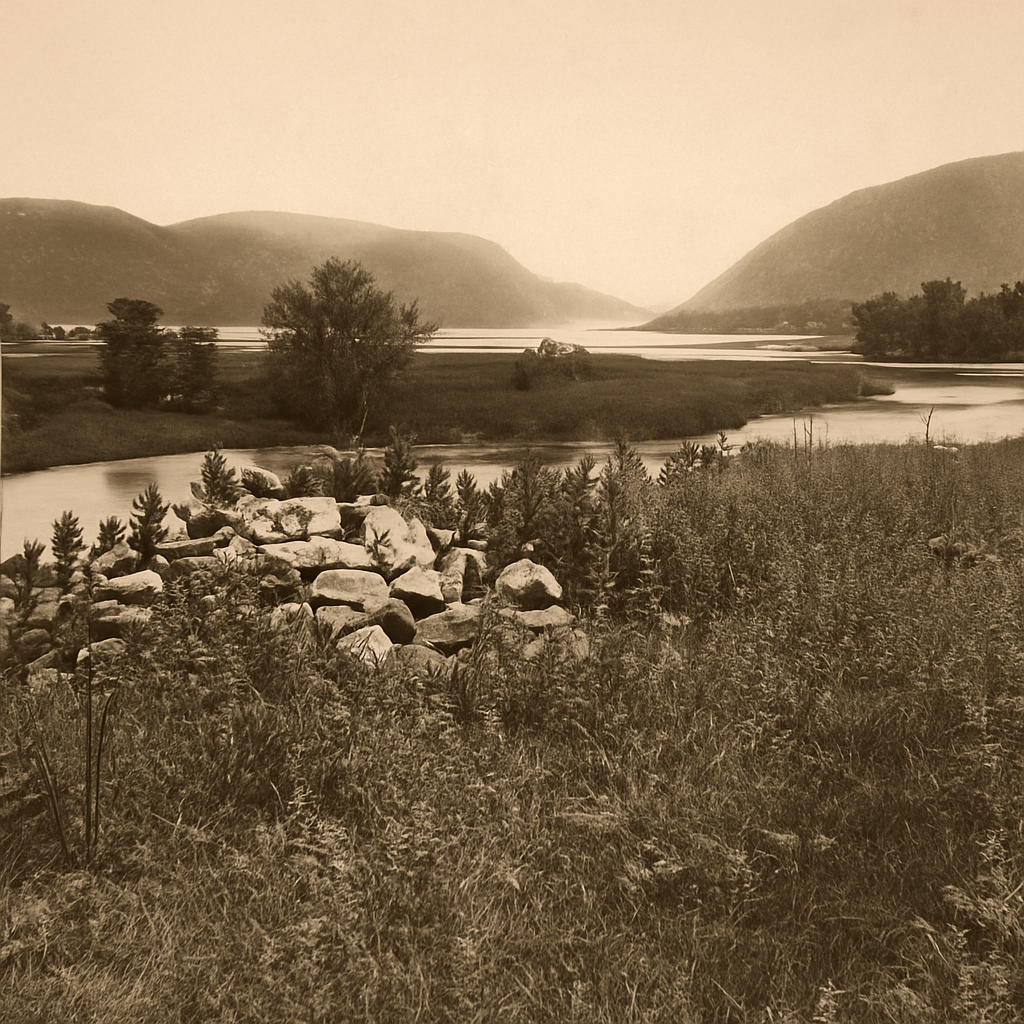
Monzievaird and his brother McGregorie obtained land at Moodna (or Murderer’s) Creek on the Hudson River where they established a fur trading outpost. (This area later became New Windsor, Orange County, New York). McGregorie was called away on several occasions – his military skills were highly valued by the New York Governor – so it was left largely to Monzievaird and others in his party to develop the new operation.
Mozievaird died just before 3 December 1689 at Moodna, on which date his servant Daniel Maskrig was instructed to deal with his belongings and settle his accounts. There were concerns that his estate was at risk of embezzlement, presumably by other residents at Moodna who had been part of the Monzievaird party.
Monzievaird’s and McGregorie’s wives and families were left in a precarious predicament, as no patent had been secured on the land. They were subsequently forced to become leaseholders and there followed a long legal saga before their rights were reinstituted.
Family fortunes in Scotland
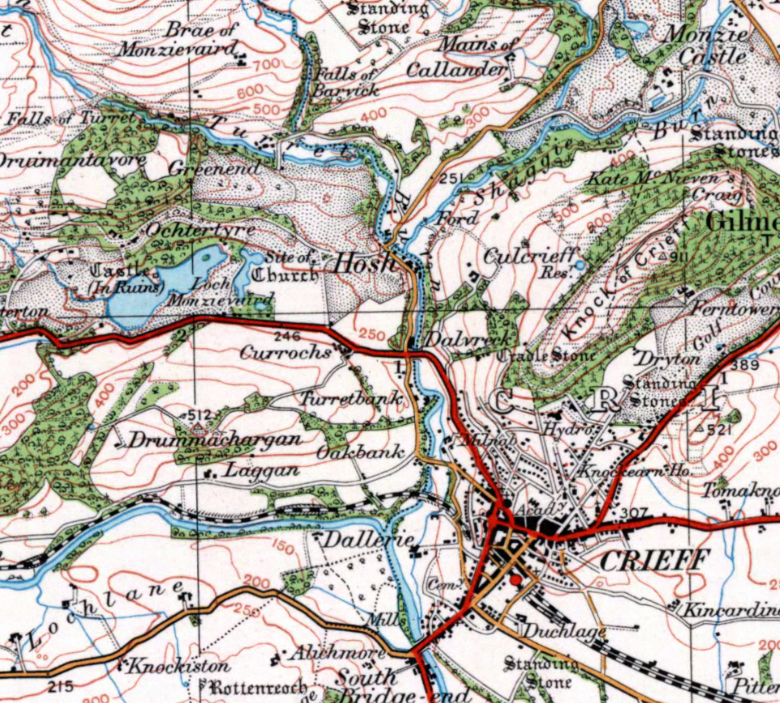
Monzievaird may have hoped that his investment in East Jersey would help restore the family fortunes back in Scotland. Before he left Scotland he transferred the lands of Monzievaird to his brother Duncan, a merchant in Edinburgh. The property continued to be a burden and Duncan was very glad to sell it in 1700 to Sir Patrick Murray of Ochtertyre. It was the opinion of the senior local landowner, John, Earl of Breadalbane, that the property “was verie well sold, and it is not worth soe much to any man in Scotland as Ochtertyre did & will pay for it, unless I were rich to redeem it only for the antiquities thereof, which is not likely that ever I do.”