Thomas Fullarton of Gallery (c.1655-1727)

From Montrose to East Jersey

Thomas Fullarton was born around 1655 in the parish of Montrose, Angus, one of the younger sons of John Fullarton of Kinnaber and Katherine Allardyce. This Kinnaber family had mercantile interests including lucrative rights to salmon fishing as far afield as Caithness.

Thomas and his brother Robert were amongst those Montrose merchants expressing interest in the potential of East Jersey. On 22 April 1684 they each received confirmation from Robert Barclay of a 1/10 of 1/48 shares in East Jersey. They witnessed each other’s purchase deeds along with their brother-in-law, Dr John Gordon of Collieston, an absentee investor, East Jersey agent and brother of emigrant Thomas Gordon. These three were at the heart of preparations for the voyage of the Thomas and Benjamin along with its master, Thomas Pearson, also from Montrose.

The brothers sailed from Montrose on 3 July 1684, accompanied by eighteen indentured servants. They arrived in Perth Amboy in October 1684 and wrote letters not long after to family members, published the next year in George Scot’s tract, The Model of the Government of East-New-Jersey. Their sister Helen was already in New Jersey, having sailed with her husband, John Skene for West Jersey in 1682. John came from the Skene of Newtyle family and was both a Quaker and a freemason. He was appointed Deputy Governor of West Jersey in October 1684.
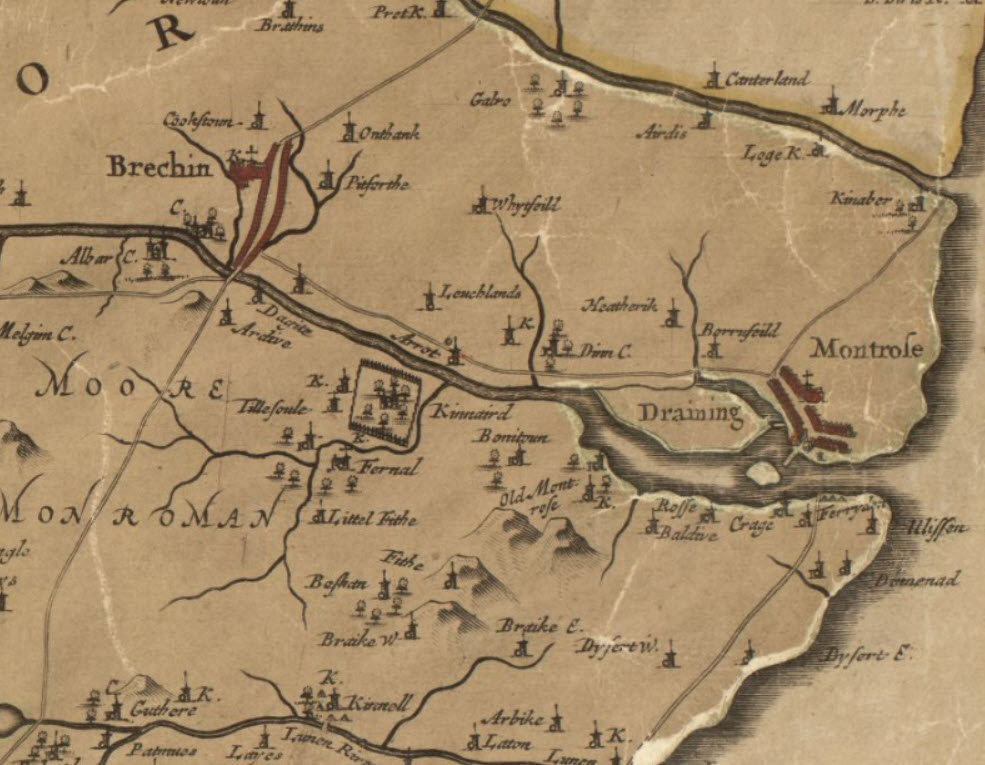
Montrose on 1678 map by Robert Edward
Montrose and Kinnaber on 1678 map, The Shire of Angus by Robert Edward. CC-BY NLS

The Fullartons in East Jersey and New York

Thomas and Robert were at sea when Robert Barclay as Governor of East Jersey commissioned them as proxies for absentee Proprietors, Thomas Barker and Thomas Hart, as part of the proprietorial group expected to deal with land rights and purchase – including from the Lenni-Lenape – and settle issues with settlers already in the province. Thomas obtained over 500 acres by the South River and Robert, an initial 300 acres at South Plainfield. Robert was also active in land development in New York province. There he was engaged as a surveyor in Ulster County, in one instance, in May 1686, on a tract of 797 acres that he would own. Both brothers served on the Board of Proprietors from April 1685 to 1687 (January in the case of Thomas and October for Robert).  

Robert died around the end of 1687 with Thomas inheriting his property in New Jersey and New York. Thomas subsequently benefitted from property dividends in their two names flowing from their rights as fractioners. Thus in October 1693, the Proprietors conveyed 670 acres and, in April 1702, 500 acres located by the Passaic River and Foulerton’s (ie, Fullarton’s) Brook.

Servants imported by Thomas Fullarton
Names of servants imported to East Jersey by Thomas Fullerton. NJSA A (EJ): Folio 187 (SSTSE023)

Onward to Barbados

Thomas had already left East Jersey, settling in Barbados by 1688, a consequence of his relationship with Thomas Rudyard who, in 1685, had made him executor of his property in Barbados, Jamaica, and England. Rudyard, a Quaker, had been a mercantile lawyer in London and advisor to William Penn in drafting the first Frame of Government (constitution) of Pennsylvania. Rudyard had earlier invested in a full share of West Jersey in 1676 before becoming First Purchaser of Pennsylvania in 1681 and then an East Jersey proprietor in 1682. Later in 1682 he was made Deputy Governor of East Jersey, holding the post until February 1684 when succeeded by Gawen Lawrie. In 1685 he left for Barbados where he died in 1692.

Thomas followed Rudyard to Barbados and took part in an expedition by acting Governor Barbados, Sir Edwyn Stede to St Lucia in 1688. This was occasioned by French encroachments on the territory claiming equal rights with the English to hunt, fish and cut wood.

Thomas would have been able to draw on Rudyard’s experience in developing a legal career. He was appointed Solicitor-General of Barbados on 31 October 1696 and on 10 August 1697 he acted as attorney for the executors of Governor Russell of Barbados. This was the day after he was admitted as a barrister to the Honourable Society of Lincoln’s Inn in London.

In Barbados in 1691 Thomas had married Joyce Sparke, the daughter of plantation owner John Sparke and Joyce Farmer. Their children, all born in Barbados, were Joyce, John, and Philip. Their mother died when they were very young.

Another Sparke daughter, Mary married Phillip Phillipse, son of Frederick Phillipse, the very prominent New York merchant involved in the slave trade. Phillip died in 1695 and Mary in 1698 leaving John Sparke’s Springhead plantation in the hands of Thomas Fullarton who assumed his wife’s half-share and was a guardian for Philip and Mary’s young son Frederick. He leased the property to major Barbados landowner Samuel Osbourne in 1710 who subsequently bought it.
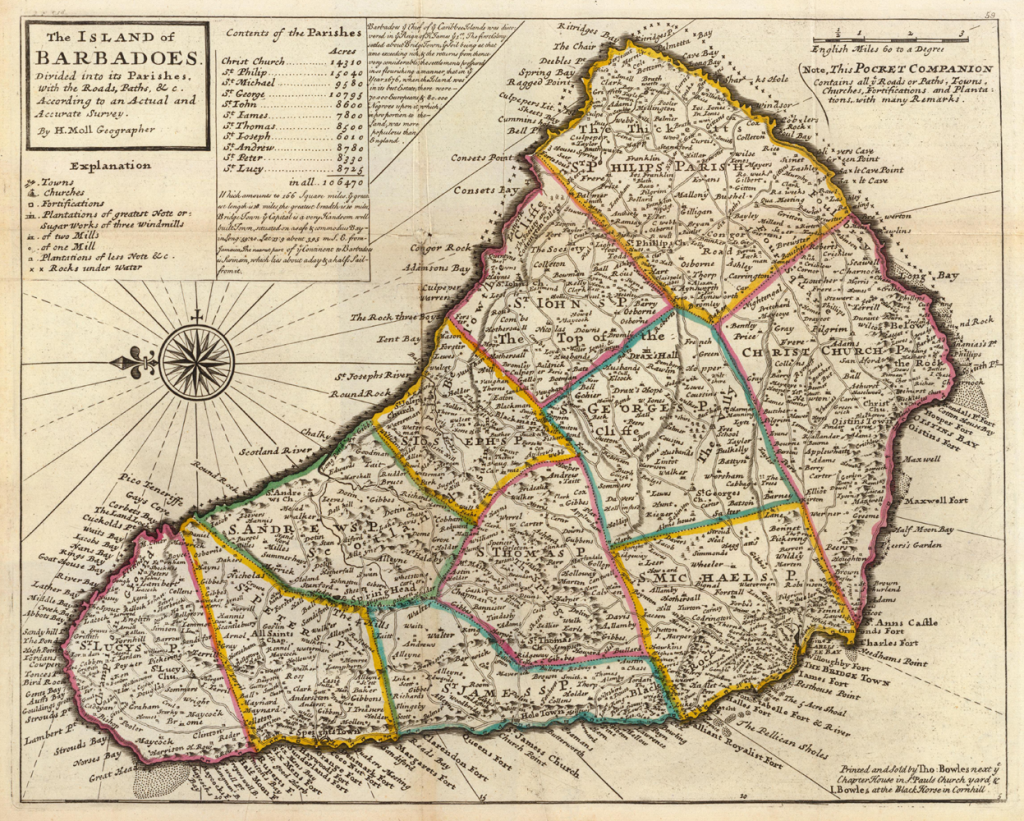
Map of Barbados by Herman Moll 1736
Map of Barbados by Herman Moll, from Atlas minor 1736. Credit: David Rumsey Historical Map Collection. https://www.caribmap.org/index.php?id=bdos&link=1736-barbados-moll&src=&sub=

In London

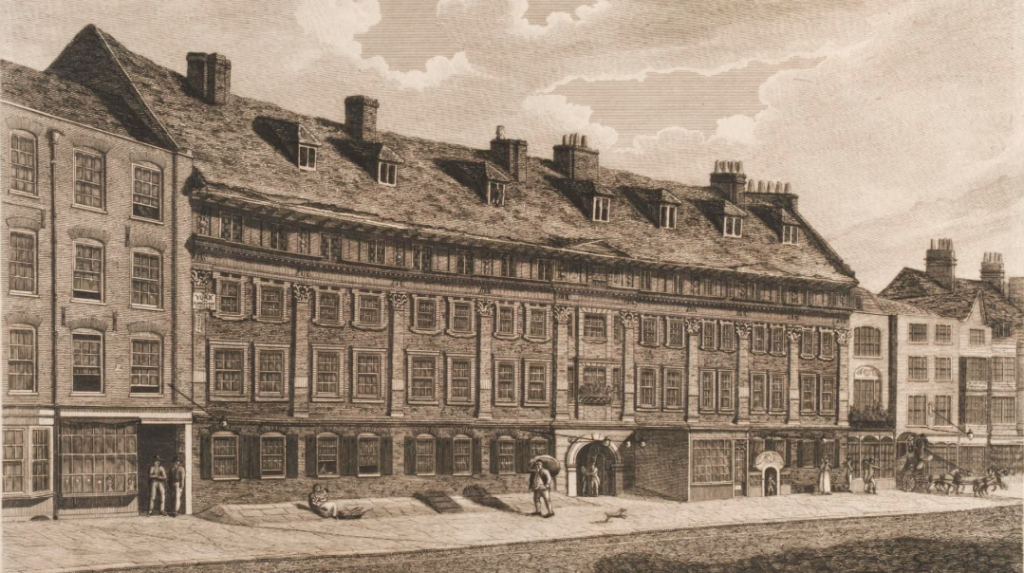
Furnival's Inn, Holborn
Furnival’s Inn, Holborn (1819) London Museum, CC BY-NC 4.0

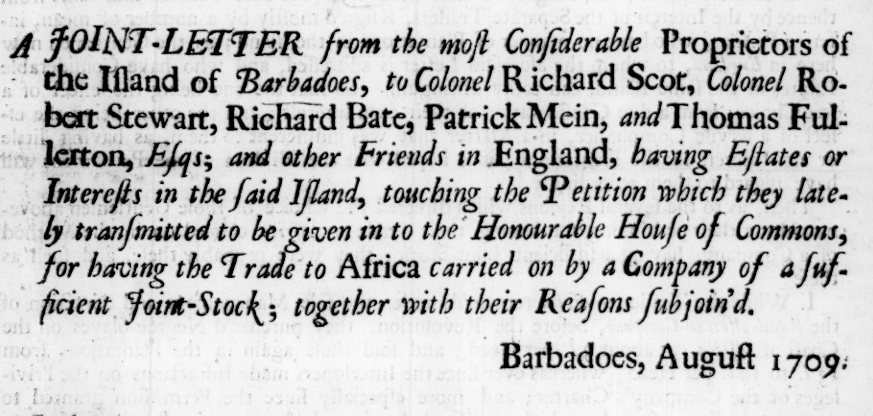
Thomas and his family were living in London by January 1704. There he represented the interests in Barbados, acting for his cousin, Alexander Skene (Secretary of Bermuda) and the estate of Lt Col John Farmer, his wife’s uncle. In December 1709 he was also one of several “friends in England having estates or interests” in Barbados who were called on by 77 plantation owners to support a parliamentary petition for reform of the 1698 Act opening the Africa trade, intended to allow the import of greater numbers of slaves.
Return to Scotland

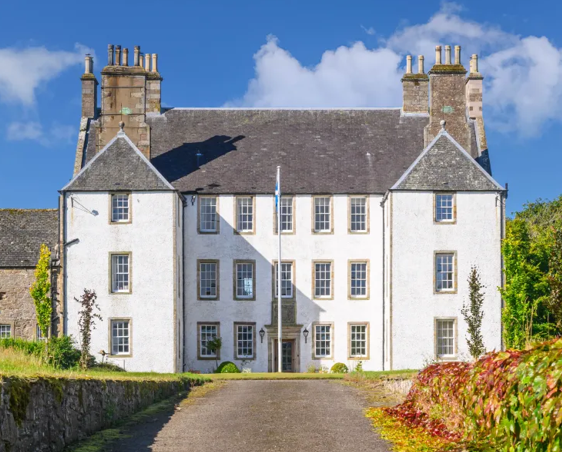
With his accumulated wealth he was able to purchase several estates including Gallery (or Gallraw), Muchalls and Thornton. He thus became known as Thomas Fullarton of Gallery, occupying the house that had been built for Sir John Falconer of Balmakellie, Master of the Mint and brother of East Jersey investor, David Falconer. In 1726 he completed ownership of the lands of Hallgreen, Sillyflat, Whitefield, Johnshaven, and Balandra, purchased for the substantial sum of £49,000 Scots. The following year he set a tailzie (entail) on his properties to secure rights of inheritance for his descendants. Thomas’s assets contrasted with those of his elder brother, John Fullarton of Kinnaber, younger who had continued his father’s trade in barley and salmon but ended significantly in debt. Thomas died sometime after 1726, probably in Angus.


See database entry for Thomas Fullarton
Approach to Gallery House
Approach to Gallery House. Source: Strutt and Parker sale particulars 2025


Gawen Drummond of Locharbor (1659–1724)

From a merchant family in Prestonpans

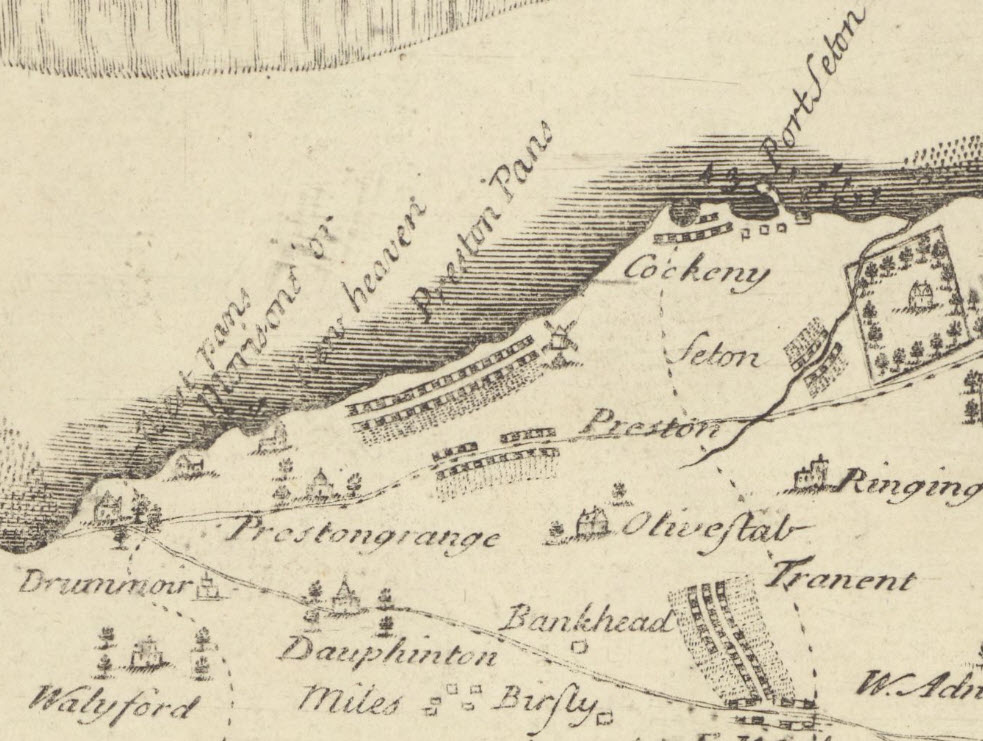
Gawen Drummond was born in 1659 in Prestonpans, East Lothian, the son of merchant Robert Drummond and Isabel Melvine. He was baptised on 19 June 1659, with George Makclaine and George Wallace acting as witnesses. By 1682, he was working as a merchant in Prestonpans. His elder brothers James and John were also merchants, John later becoming well-known as John Drummond of Newton, a prominent director of the New Mills Manufactory  in Haddington and of the Company of Scotland which promoted the Darien expedition) and Alexander, manager of the salt works in Prestonpans for the local laird, William Morison of Prestongrange.

An early ‘fractioner’

Gawen was one of the earliest of the so-called ‘fractioners’ to buy a share of East Jersey acquired by the Scots Proprietors. On 20 February 1681/82, he purchased the rights to 500 acres from his kinsman John Drummond of Lundin.

Accompanied by his nephew Robert and probably by his first wife and young children, he departed from Leith on 11 June 1684 aboard the Shield of Stockton and arrived at the Patuxent River, Maryland, on 29 September. From there they either went overland or coastal vessel to Perth Amboy.

Prestonpans on Adair map 1736

Establishing ‘Locharbor’

Gawen established an estate he called Locharbor in Monmouth County. In the “name & behalfe of the Governor & proprietors of East new Jersey”, he first arranged the purchase of land from three Lenni-Lenape sachems, Wanamassa, Wallammassekaman and Waywinelunce. The land was known to them surrounding Ulickaqueko, a “great pond”, bounded by a pine hill and a brook and tracts previously sold to Thomas Potter and Samuel White.

The price was one gun, five matchcoats (heavy winter coats), one kettle, and two pounds of powder. This was the procedure drawn up under the Concessions and Agreements of the colony whereby individual settlers were prohibited from buying land directly from Native Americans as sovereign individuals. Purchases had to be made in the name of the Proprietors, who would then issue warrants to develop the land, once cleared, to settlers. In Gawen’s case, this occurred on 19 March 1688/89, when he was granted a warrant to lay out 680 acres where he was “already settled”. Of this allocation, 80 acres was for his nephew Robert. In December 1688, Gawen purchased the 30-acre of headland of James Kilgour and in March 1688/89, a further 30 acres from James Crighton.

Clerk of the County Court

Gawen played a role in public life. In March 1701, he was Clerk of the Monmouth Court of Sessions, when dramatic events unfolded. During a case against pirate Moses Butterworth, a local mob seized Governor Andrew Hamilton, two deputies, the two justices, the Attorney General and Secretary as well as Gawen himself. This was during a period of opposition to the proprietorial rule of East Jersey and a factor precipitating the merger of East and West Jersey the following year.

Death and family

Gawen died sometime before 31 August 1724 when administration of his estate was granted to his son Gawen. An inventory dated 2 August 1728 valued his possessions at £136 14s 10d and included books and seafaring instruments. It is believed that he was buried at the Friends Meeting House Burial Ground in Shrewsbury, Monmouth County, although no gravestone survives.

His second wife was Mary Layton or Lawton, believed to be the daughter of William Layton and Violet Blackman, and born in Rhode Island or Middletown around 1668. Gawen’s children were Gawen, Robert, John, Isabel, Sarah, and Rebecca.


See database entry for Gawen Drummond


John Reid of Hortencie (1655-1723)

John Reid, the gard’ner

John Reid, author of The Scots Gard’ner, was born in 1655 at Niddry Castle near Kirkliston in West Lothian, where both his father and grandfather were gardeners to the Seton family. He was apprenticed in 1668 to Andrew Wardlaw, a merchant in Edinburgh, but by the 1670s had turned decisively to horticulture. His early career was spent in some of the great gardens of Scotland’s landed estates – first as under-gardener to Quaker Hew Wood on the Duke of Hamilton’s estate, then as gardener to James, Earl of Perth at Drummond Castle, and later to Sir George Mackenzie of Rosehaugh at his estate at the Shank near Gorebridge, Midlothian.

Reid became a Quaker while in Hamilton and married Margaret Miller at the Friends’ in 1678. Around this time he began writing The Scots Gard’ner, the first practical guide to gardening and horticulture published in Scotland. It was issued in Edinburgh in 1683, shortly after his departure for East Jersey. The book distilled his knowledge, providing advice on soils, kitchen and flower gardens, orchards, and the setting-out of grounds.

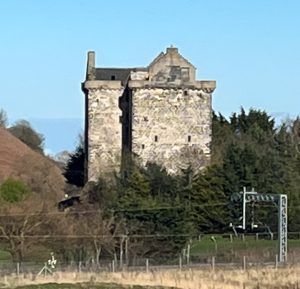
Niddrie Castle today
Niddrie Castle today. Photo: D Johnstone

‘Overseer’ for the first emigrants

John had gained the confidence of influential employers and also leading Quakers including Robert Barclay, prime mover in the East Jersey venture. This resulted in his appointment as one of two ‘overseers’ appointed by the Scots Proprietors to travel with the first shipload of emigrants aboard the Exchange of Stockton which left from Aberdeen in August 1683. Their role was to manage the initial settlement, ensure that provisions and resources were properly distributed, and supervise early agricultural activity. He was indentured for four years but, like his fellow overseer John Hamton, he was granted an salary of £25 and provided with a house and livestock. Hamton was also a gardener and a Quaker, gardening being an activity of great appeal to the early Quakers as a source of spiritual meaning and a way to contribute to society.

Surveyor, landowner and public official

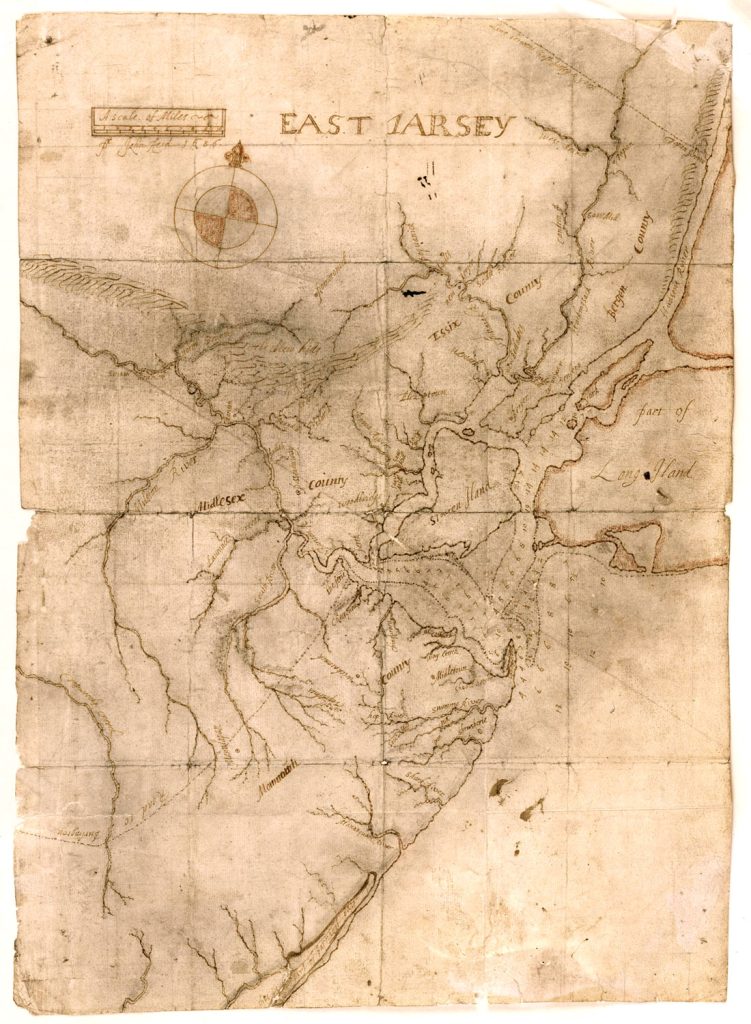
Manuscript map of New Jarsey, John Reid 1686
Manuscript map of New Jarsey, John Reid 1686. Source: New Jersey State Archives

Gardening was a highly skilled occupation requiring going beyond botany to encompass mathematics, physics and the science of weather. Not only did Reid make a practical contribution to the laying out of land and cultivation but his skills led him to be appointed Surveyor-General of East Jersey. He helped to establish the system of surveys and boundaries that underpinned East Jersey’s land administration and later assisted in defining the line dividing East and West Jersey, work for which his accuracy and fairness were commended.

Gardening was a highly skilled occupation requiring going beyond botany to encompass mathematics, physics and the science of weather. Not only did Reid make a practical contribution to the laying out of land and cultivation but his skills led him to be appointed Surveyor-General of East Jersey. He helped to establish the system of surveys and boundaries that underpinned East Jersey’s land administration and later assisted in defining the line dividing East and West Jersey, work for which his accuracy and fairness were commended.

Reid also played a role in the governance of East Jersey as a member of the Board of Proprietors from 1692, serving as proxy for William Dockwra, holding this position until 1705. He also served as a County Court judge and as commissioner of roads.

Religion and family

Reid was one of the Quakers who, following the criticisms of George Keith over doctrinal practices left for the Church of England. He received his first Anglican Communion in 1703 and remained a communicant thereafter.

Reid died in 1723 at Freehold, Monmouth County and was buried at Topanemus, at the Old Scots Burying Ground. His library, inventoried after his death, reflected both his scientific and literary tastes, containing books on law, theology, astronomy and history, as well as Scotland’s sovereignty asserted by Sir Thomas Craig and the novels of Aphra Behn.

He had travelled in 1683 with his wife Margaret to East Jersey with three daughters under four. Tragedy struck when the youngest, Margaret died within three months of their arrival, and six months later another child was stillborn. Two years on they had a son, John, who trained as a lawyer and practised in Westchester, New York. Their daughters were schooled in Philadelphia and the elder, Anna, married John Anderson, the master of the Unicorn, one of the ships that had been part of the Darien expedition in 1698, and later a prominent New Jersey politician. Their other daughter, Helen, married Reverend John Bartow. He had been sent in1702 as a missionary by the Society for the Propagation of the Gospel in London and two years later became Anglican rector of Westchester.

Other close kin also emigrated in 1683: two of John’s brothers: James who travelled as a free emigrant with his wife and two children, and George, an indentured servant, as well as John’s brother-in-law, James Miller of Gartshore and wife, Margaret Robinson.


See database entry for John Reid


Adam Hude (1661-1746)

Adam Hude was one of the Covenanters transported aboard the Henry and Francis in 1685. Born about 1661, he came from the Eastern Borders and worked as a weaver before his imprisonment.

In March 1685 Hude was described by the authorities as a “disaffected person”. During the trial of the young Covenanter preacher James Renwick he was accused of dictating a “seditious letter against the government and orthodix clergie” that had been left at Ashkirk church in Selkirkshire. Two months later, in May 1685, he refused to take the oath of allegiance demanded by the government. Such refusals were treated as proof of political and religious disloyalty. Had Hude taken the oath he would likely have been released, but his refusal led instead to imprisonment in Dunnottar Castle and ultimately to transportation in September. Amongst the other prisoners was Marion Renwick from Tongland in Kirkcudbrightshire who became his wife not very long after their arrival in the colony.

The transported prisoners were intended to be sold into indentured servitude on arrival. Hude, however, was one of those who argued in the County Court against this arrangement and secured his freedom. For a time, he lived on Staten Island, across the Arthur Kill from East Jersey, where he had opportunities for work and trade and found himself amongst others sympathetic to his Presbyterian beliefs.

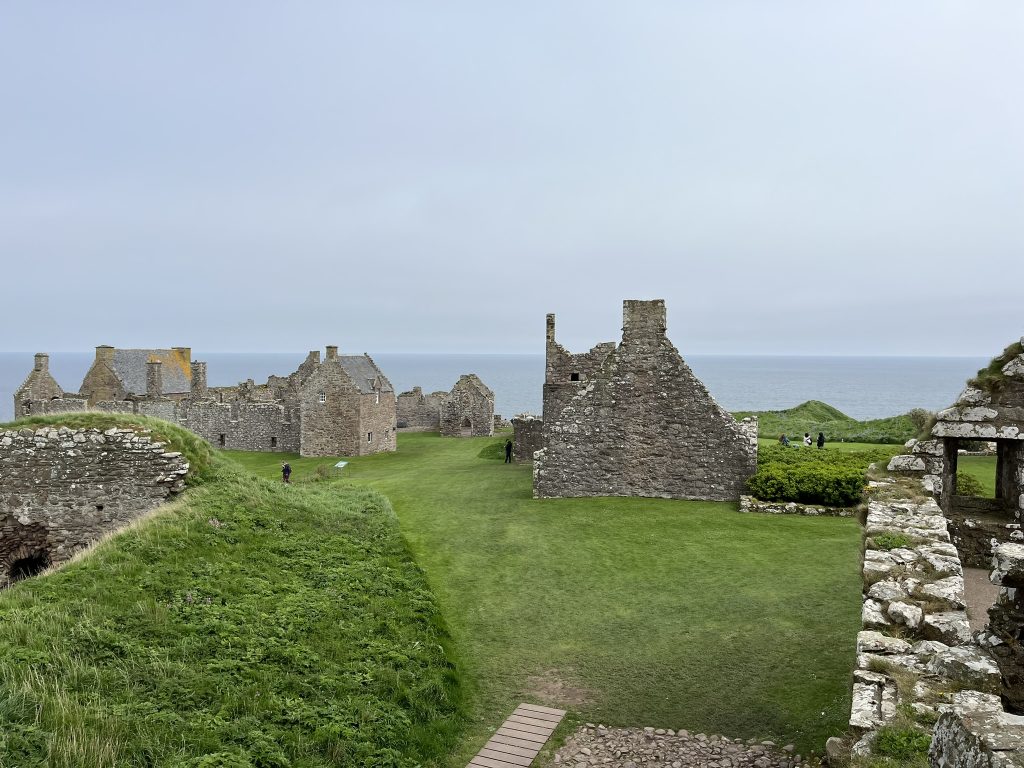
Dunnottar looking towards North Sea
Dunnottar looking towards North Sea. Photo: D Johnstone

Settled in Woodbridge

In 1695 Adam purchased land in Woodbridge in Middlesex County and moved from Staten Island not long afterwards. Over the following decades he became a well-established member of the community. Records show him serving on juries and undertaking other public duties, indicating the standing he had achieved among his neighbours. In 1701 he became a Member of the Provincial Assembly of New Jersey. In the same year he purchased further land in Woodbridge.

Adam remained a staunch Presbyterian and was formally admitted as a member of the new Presbyterian Church in Woodbridge in 1710.

Adam and Marion had six children in Woodbridge, two daughters and four sons. Both Robert and James were to follow their father into public life, holding local offices in Middlesex County.

Hude was appointed a judge on the Court of Common Pleas of Middlesex County in 1718 and was subsequently Presiding Judge for over 10 years, to 1733. His career illustrates the striking transformation experienced by many of the transported Covenanters: men who had been imprisoned and banished for their religious convictions in Scotland later became respected members of colonial society.

He lived to an advanced age, dying in 1746 at about eighty-five, Marion having pre-deceased him in 1732.

Further details, including sources, of Adam Hude’s life and family can be found in the East Jersey Bound database:


See database entry for Adam Hude


David Toschach of Monzievaird (c.1645-1689)

David Toschach, 7th of Monzievaird, led a party of 25 emigrants to East New Jersey in 1685 and set up a fur trading post in New York.

David Toschach [or Tosheoch] was born around 1645 in the parish of Monzievaird and Strowan, Perthshire into a minor landed family. He was the son of Andrew Tosheoch, 6th of Monzievaird, and Catherine Campbell, the daughter of Sir Robert Campbell of Glenorchy and Isabel Macintosh.

His family were burdened financially, dating back to his grandfather David’s decision in 1615 to mortgage their lands. Three years later this David was killed in Perth by Laurence Bruce of Cultnamundie and others, a consequence of a feud. The Tosheoch family petitioned the Privy Council for compensation, but this was not forthcoming until Bruce returned from exile 18 years later and only able to pay a small part of his original penalty. The next laird, Andrew was a Royalist whose lands were sequestered by Parliament in the 1650s though he gained political favour under King Charles II being appointed a Justice of the Peace in 1660 before dying in 1665.

David became 7th of Monzievaird when, in 1668, he inherited his father’s lands and the family debts. Matters came to a head when in 1674, he and his mother were pursued by John Graham of Balgowan for fulfilment of a heritable bond of 5,000 merks, annual interest of 300 merks, from the town and lands of Meckven. In the same year he also had money due to him arrested to pay another creditor, Francis Stewart.

Monzievaird was a supporter of his first cousin, Sir John Campbell of Glenorchy in his dispute with George Sinclair of Keiss over the earldom of Caithness, and took part in the Battle of Altimarlach on 13 July 1680 which took place near Wick in Caithness – the last clan battle in Scotland. In August 1683 Monzievaird was amongst those granted clemency for this by King Charles II. This group also included Captain Patrick McGregorie who was married to his sister Margaret.


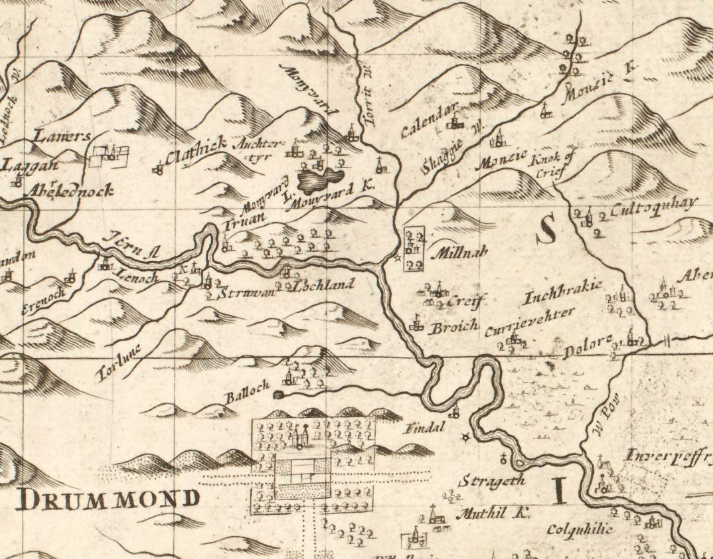
Extract from The Mapp of Straithern, Stormount, and Cars of Gourie, with the Rivers Tay and Jern by John Adair, 1720
Extract from The Mapp of Straithern, Stormount, and Cars of Gourie by John Adair (1683 survey) showing ‘Monyvard’. CC_BY National Library of Scotland

The move to East Jersey

In March 1684, he purchased a quarter of the share of East New Jersey held by James, Earl of Perth, for £250, thus becoming one of the so-called ‘fractioners’. He was also listed as one of 29 agents in a pamphlet published in 1684 to attract tradesmen and farm servants to join the colonial venture. He led a party of emigrants including his wife Jean Campbell, the McGregories and their children, and about 15 others who sailed for East Jersey aboard the Shield of Stockton in July 1684. He also contracted with the Privy Council to carry three thieves from Stirling Tolbooth. The ship arrived at the Patuxent River in Maryland on 29 September and the passengers had to travel 100 miles overland or by coastal craft to Perth Amboy.

Monzievaird was quickly disillusioned with his situation in East Jersey. He failed to obtain the specific area of land he wanted and wrote to the Earl of Perth in March 1685 asking for his money back. He complained of being treated badly by the “chifts and cheats” of Quakers. Knowledge of this letter led the Board of Proprietors to prepare a rebuttal.

Monzievaird was very conscious of his first-born social status – in contrast to the younger sons of landed gentry amongst the emigrants – and he appears in the New Jersey records as  ‘The Laird of Minivaird’. He may have had misplaced illusions about his likely life in East Jersey, suggested by his insistence in December 1684 that John Campbell (possibly a Perthshire relative of his wife’s) provide him with a “footman in velvet” to serve him when he attended a meeting of the Proprietors in Perth Amboy.

Onward to New York

Monzievaird’s frustrations led him on 15 July 1685 to sell his East Jersey share to Montrose merchant David Mudie, who provided a bond to guarantee the sale. By 22 June 1686, Monzievaird was resident in New York City.

Monzievaird and his brother McGregorie obtained land at Moodna (or Murderer’s) Creek on the Hudson River where they established a fur trading outpost. (This area later became New Windsor, Orange County, New York). McGregorie was called away on several occasions – his military skills were highly valued by the New York Governor – so it was left largely to Monzievaird and others in his party to develop the new operation.

Mozievaird died just before 3 December 1689 at Moodna, on which date his servant Daniel Maskrig was instructed to deal with his belongings and settle his accounts. There were concerns that his estate was at risk of embezzlement, presumably by other residents at Moodna who had been part of the Monzievaird party.

Monzievaird’s and McGregorie’s wives and families were left in a precarious predicament, as no patent had been secured on the land. They were subsequently forced to become leaseholders and there followed a long legal saga before their rights were reinstituted.

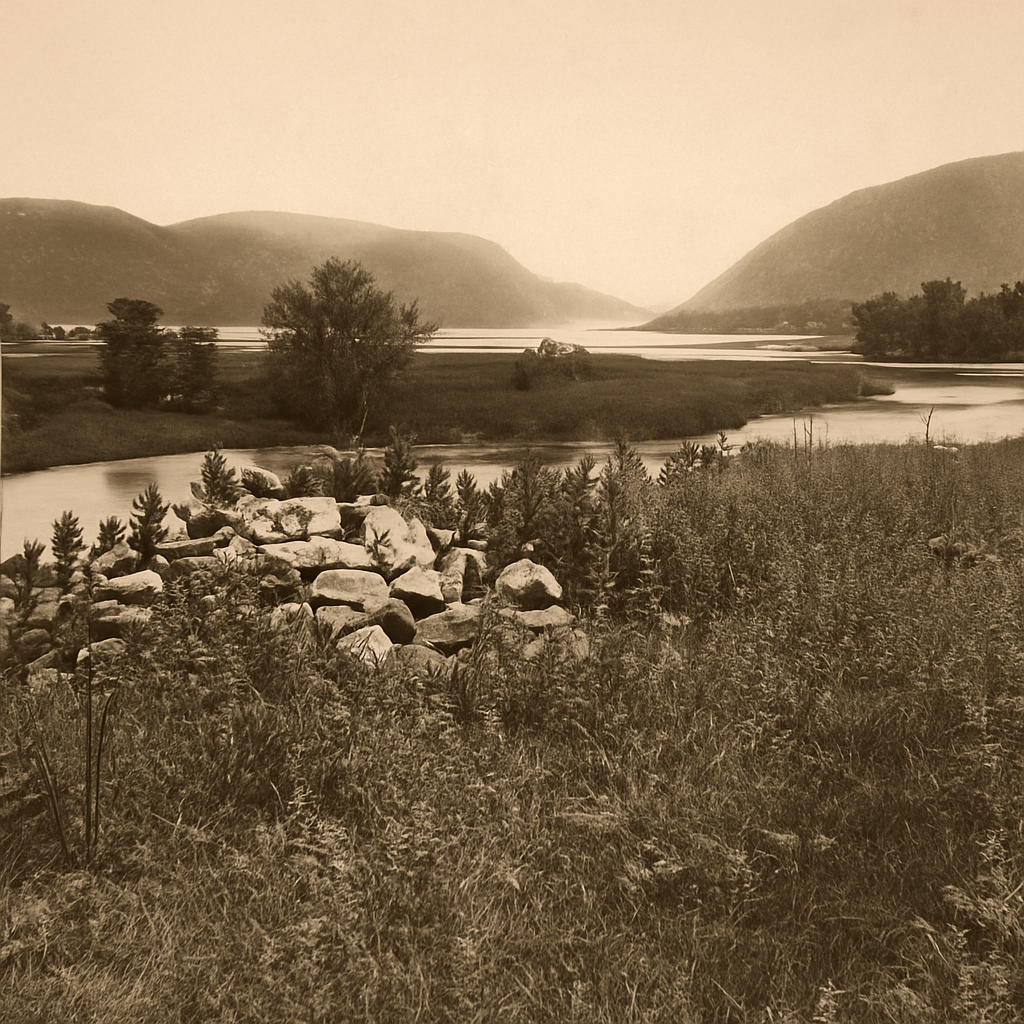
Moodna Creek photograph, 1870s
Moodna Creek in the 1870s. Photo from ‘Shades of Cornwall Past’ Facebook Group

Family fortunes in Scotland

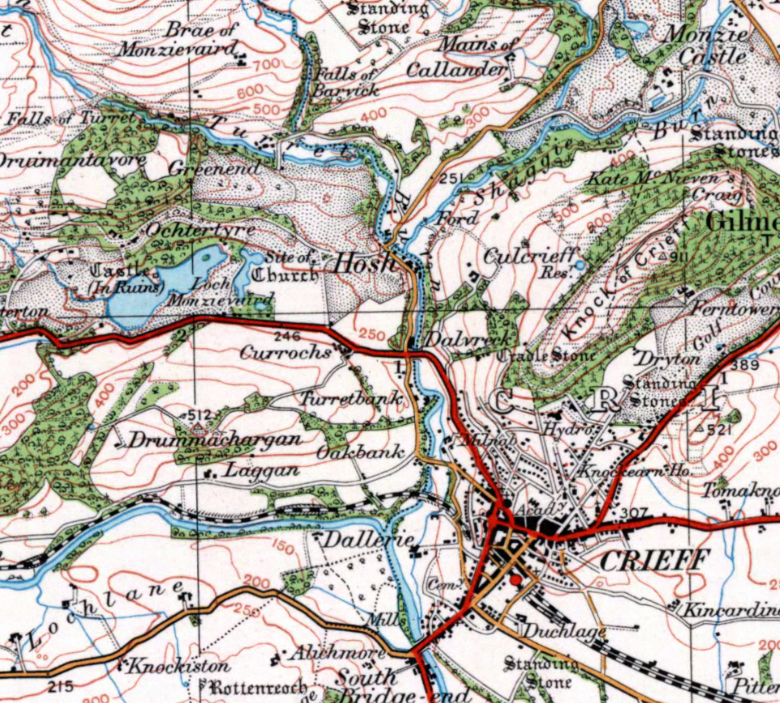
Map showing Loch Monzievaird relative to Crieff on a 1930 OS map
Map showing Loch Monzievaird relative to Crieff on a 1930 OS map. CC_BY National Library of Scotland

Monzievaird may have hoped that his investment in East Jersey would help restore the family fortunes back in Scotland. Before he left Scotland he transferred the lands of Monzievaird to his brother Duncan, a merchant in Edinburgh. The property continued to be a burden and Duncan was very glad to sell it in 1700 to Sir Patrick Murray of Ochtertyre. It was the opinion of the senior local landowner, John, Earl of Breadalbane, that the property “was verie well sold, and it is not worth soe much to any man in Scotland as Ochtertyre did & will pay for it, unless I were rich to redeem it only for the antiquities thereof, which is not likely that ever I do.”


See database entry for David Toschach


David Jamieson (1659-1739)

David Jamieson was born in March 1659 in Linlithgow, West Lothian, to David Jamie and Bessie Tod. He grew up in a Covenanter household and learnt the tailoring skills of his father’s business.

The authorities accused him of being a member of the Covenanter army at the Battle of Bothwell Bridge on 22 June 1679. The following January, he was declared an outlaw and his belongings confiscated for failing to appear on a charge of treason and rebellion. Regarded as able by his peers, he may briefly that year have studied in Utrecht, Netherlands, supported by Covenanter funds raised at conventicles or in other ways.

By 1681, however he was back in West Lothian and a leading member of a Covenanter sect known as the Sweet Singers, or Gibbites (as named after their leader, John Gibb). In May that year, he and others were arrested near Wolf Craigs in the Pentland Hills near Edinburgh and imprisoned in Canongate Tolbooth. They had rapidly developed notoriety for their extreme views, not only in the eyes of magistrates but also fellow Covenanters for whom their rejection of the formal church and its ministers was anathema. They led very austere lives and took to periodic fasting, which led them to be accused of manic behaviour.

Field preaching engraving

Front page of ‘A Blasphemous and Treasonable Paper Emitted by the PHANATICAL under-subscribers’, (Edinburgh, 1681)
‘A Blasphemous and Treasonable Paper Emitted by the PHANATICAL under-subscribers’, (Edinburgh, 1681)

Despite being one of the authors of an extremely radical religious manifesto produced at the end of May, David and other Sweet Singers were subsequently released. However, he was again in prison in November for failing to pay a fine for absenting himself from parish church services. He appears again in the penal records on 4 January 1683, amongst Linlithgow residents accused of religious disorder.

In early May 1684 David was arrested, having been on the Fugitive Roll, and on 16 May he was formally banished by the Privy Council and ordered to be transported “to the Plantations in America”. He could have been shipped to South Carolina with other merchants but ended up the responsibility of Dr George Lockhart, the New York merchant with a property interest in East Jersey who also agreed to take two other Sweet Singers, John Gibb and Alexander Montgomery (or Monteith), along with six other prisoners.  Lockhart’s ship, the Seaflower left Leith on 21 August 1684 heading for New York.

There David was sold as an indentured servant to Josiah Clarke, Anglican chaplain of the New York Fort. Clarke regarded him with promise and he was allowed “to teach school to redeem himself”. He began to train in law and in 1690 was a legal clerk to Matthew Clarkson, Secretary of New York Province. It was not long before he was appointed Clerk to the Council of New York, 15 April 1691. He held the post until 1698 when he was dismissed by Governor Lord Bellomont, who accused him of having been condemned to death in Scotland and of atheism and bigamy.

This was not, however, to be the end of his career in public office. In June 1701, he was appointed deputy provincial Surveyor-General and in 1711 he became Chief Justice of New Jersey, serving until 1723. In June 1712, he also became Recorder of New York City with significant legal responsibilities. In January 1720 he was sworn in as New York Attorney General.


The old city hall, Wall Street, watercolour from the original drawing by David Grimm
The old city hall, Wall Street, from the original drawing by David Grimm. New York Public Library Digital Collections

He practised independently as an attorney and was one of the founders of the New York Bar Association. In 1707, he was one of three attorneys defending Francis Makemie, a Scots-Irish minister, for preaching without a licence, a case notable in the annals of Presbyterianism in the USA. David himself was no longer Presbyterian, having become Anglican and been chosen as a vestryman (like an elder in the Church of Scotland) in the Trinity Church in Lower Manhattan.

David was active in the property market mainly in New York. In June 1696, he was a partner in a land patent in Harrison, Westchester County and the following year in a consortium which secured what became known as the Great Nine Partners Patent in Dutchess County, though the latter investment he never saw fully realised. Later in 1697  he was party to a land grant of 1,200 acres in Deerpark, Orange County. On 11 November 1703, he sold land in Piscataway, New Jersey, to Scottish immigrant Thomas Grubb and his wife.

David married Anna Maria Hardenbroeck on 7 May 1692 at the Collegiate Church in New York. Anna Maria was niece of Margarete Hardenbroek, a leading merchant in New York in her own right as well as partner to her second husband, Frederick Philipse. Philipse was involved in slave trading and privateering including as a sponsor of William Kidd’s piratical activities with the Adventure Galley in the Indian Ocean in 1695.

David and Anna Maria had two children: Elizabeth and William. After Anna Maria’s death he married Joanna Meech on 16 January 1703. He died on 26 July 1739 in Manhattan and was buried there.


See database entry for David Jamieson


Jean Moffat (c.1666-c.1749)

Jean Moffat was born in about 1666 at Netherbarns just outside Galashiels, the daughter of James Moffat, tenant farmer and determined Covenanter. Jean was perhaps even stronger her beliefs and persistently refused to attend the services of the local minister. In consequence her father was fined 1,000 merks, for failing in his legal responsibility to ensure religious conformity by his family and farm workers. Her father was already in trouble, accused of harbouring rebels and placed on the Fugitive Roll. Their house was raided by dragoons and goods and livestock carried off.

Dunnottar Castle, May 2023

On 18 May 1685, following the authorities’ round-up of many of the most resolute Covenanters, Jean found herself in Burntisland, Fife amongst the 45 women prisoners to be sent to Dunnottar Castle in Kincardineshire. There she was held about 80 days in cramped, filthy conditions housing over 160 people. By mid August, Privy Council members were impatient to remove the most recalcitrant Covenanters and on 18 August, Jean was banished for refusing oaths of allegiance to the King and opposition to taking up arms in rebellion and given to George Scot of Pitlochie for transportation.

The 'Whigs Vault' in Dunnottar Castle
The so-called ‘Whigs Vault’ in Dunnottar Castle

Once aboard the Henry and Francis lying off the port of Leith, she was one of 28 signatories of a testimony protesting the banishment of the Covenanters. The ship left on 5 September 1685 and arrived at Perth Amboy on 7 December with Jean amongst the survivors of the disease-ridden voyage.

Jean was amongst the party of Covenanters who decided to leave East Jersey and head for New England where they hoped to encounter English settlers who held sympathetic religious views. By 1686, she was living in Waterbury, Connecticut, where she married John Fraser [or Frazer], a fellow Dunnottar prisoner transported on the Henry and Francis.

John, a university graduate from the Fraser of Pitcalzean family, Nigg in Ross-shire, had earned a living in London as a writing master where he had been arrested in December 1684 for attending a house conventicle. Once in Waterbury he was licensed to preach by local Congregationalist ministers. This stood him in good stead when he and Jean returned to Scotland after the accession of William and Mary and the consequent resumption of religious authority on the part of the Presbyterian Church. Jean was then able to visit with her father who was once more living on his farm at Netherbarns.

John Fraser was ordained as minister of Glencorse parish near Penicuik, Midlothian in December 1691, before transferring to Alness in Easter Ross in 1695, pressed by the General Assembly to move to help address a shortage of Gaelic-speaking ministers.

John Fraser wrote a memoir of his experience as a Covenanter prisoner which was used by Robert Wodrow in his History of the Sufferings of the Church of Scotland, in the process firmly planting the tales of Dunnottar Castle and the voyage of the Henry and Francis in popular Covenanter memory.

Jean and John had five children after their return to Scotland: Jean, James, Katherine, Isabel, and John. Their son James trained for the ministry and later (1736) also became minister of Alness. James’s collected works were published in 1834, with the addition by the editor of an account of his and his parents’ lives.

Following the death of John Fraser in 1711, Jean married widower George Gordon, minister of Cromarty in 1714. There she was regarded as an attractive woman though known  – not to her face – as ‘Luggie’, as it was rumoured that she had suffered the fate other banished Covenanters of having her ears clipped. Hugh Miller relates in his Scenes and Legends of the North of Scotland (1835), his history of Cromarty, that this was not the case although she always kept her ears covered. Jean may have outlived George Gordon, who died in 1749.


Text from a Short Account of the Author (Rev. James Fraser of Pitcalzian), 1834
Extract from collected works of Rev. James Fraser referring to the author’s father, John Fraser.

Spoon given by Jean Moffat to her daughter Katherine Fraser
Spoon given by Jean Moffat to her daughter Katherine Fraser. Maker: attributed to Hugh Ross of Tain, c.1740? Source: Estelle Quick, ‘A Big Story from a Little Spoon’, The Finial, Vol.21/05, May/June 2011 (Silver Spoon Club of Great Britain)


See database entry for Jean Moffat


See database entry for John Fraser


Andrew Paterson (1659–1746)

Andrew Paterson was a Covenanter who was transported in 1685 and made his way to Connecticut where he settled and had a family.

Andrew Paterson [or Patterson] was born in 1659 in Hamilton, Lanarkshire. He was firm in his Covenanting beliefs and may have been in the Covenanter army at the Battle of Bothwell Bridge in 1679.

In 1685, in the light of the expected Argyll Rising, the authorities considered him a threat, brought him under arrest and held him in Glasgow Tolbooth. On 20 May he refused the oath of allegiance to the Crown but though he “remained obstinat” he avoided the formal sentence of banishment unlike some of the others. This did not however, prevent his later transportation.

He was immediately sent to Burntisland to join other Covenanter prisoners and thence to Dunnottar Castle, where he was held until early August. The group was then taken to Leith, arriving on 17 August and soon after placed aboard the Henry and Francis. There he was one of the signatories of the testimony protesting their enforced exile on their refusal to acknowledge the King, not Jesus, as head of the church, “a sworn enemy to religion, an avowed papist whom by our covenants we are bound to withstand and disown”.

Patterson was one of the survivors aboard the Henry and Francis, arriving in Perth Amboy on 7 December 1685. 

A life in Connecticut

In early 1686, he walked over 90 miles to Stratford, Connecticut, accompanying Robert McEwen and ten other Covenanters who wished to find somewhere to live with people were sympathetic to their religious beliefs. They were also under threat for forced indenture if they stayed in East Jersey, though this was resolved in favour of the Covenanter transportees in late February 1686.

Four years later, Paterson married Elizabeth Peat [or Peet], granddaughter of an English Puritan emigrant, John Peat from Derby. The Patersons went on to have seven children: Sarah, Charles, William, Elizabeth, Hannah, Mary, and John. In late 1691 he acquired 16 acres on the west side of Stonibrook Hill in Stratford, giving him the status of a town proprietor. His son John was one of the first graduates of Yale College in 1718.

Paterson served as Town Sergeant for a spell, responsible for maintaining public order and carrying out orders of the town’s governing body, including serving warrants, summoning individuals to court, and making arrests. He was also a School Committeeman in 1718, contributing to the oversight of the local school.

In November 1738, along with his sons William and John, by then also town proprietors, he was granted a portion of undivided land in Fairfield.

Andrew Paterson died, aged 87, on 2 December 1746 and was buried in the Old Congregational Burying Place in Stratford.


See database entry for Andrew Paterson


Andrew Paterson gravestone, Fairfield
Andrew Paterson gravestone, Fairfield – photo by Steven Smith (FindaGrave)
Read more

Elisha G Patterson, Andrew Patterson, of Stratford, Conn., and the First Four Generations of His Descendants (privately printed, 1892) 

Elisha G Patterson, Andrew Patterson, of Stratford, Conn., and the First Four Generations of His Descendants (privately printed, 1892) 


John Cockburn (c.1659- aft.1712)

John Cockburn was a mason from the Borders who emigrated as an indentured servant and was one of the very first freemasons in Colonial America.

He emigrated aboard the Shield of Stockton, leaving Leith on 3 July and landing at the Patuxent Rover, Delaware on 29 September. From there he and all the other passengers made their way to East Jersey, overland or by boat.

Cockburn was imported by merchant John Campbell on behalf of Captain Andrew Hamilton who was later, in 1686, sent over by the Scots Proprietors to investigate how the colony was being run. Hamilton may have been a freemason too. One clue is that Hamilton chose advocate Sir John Harper of Cambusnethan to be the primary witness at the baptism of his son John in Edinburgh in 1685. Harper had been a leading member of the Lodge since joining in 1670 as a ‘speculative’ mason as distinct from an ‘operative’ mason like Cockburn.

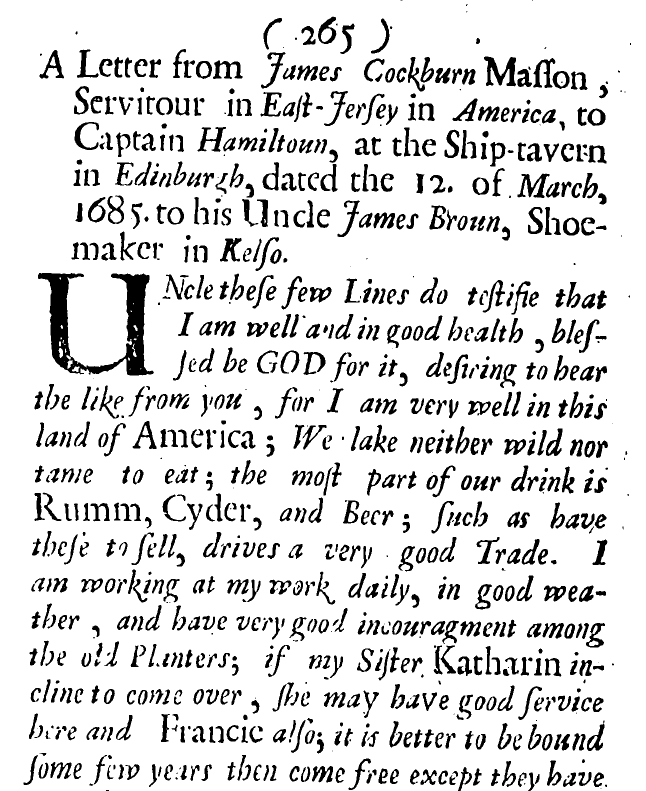
Extract 1 of letter by John Cockburn 1685

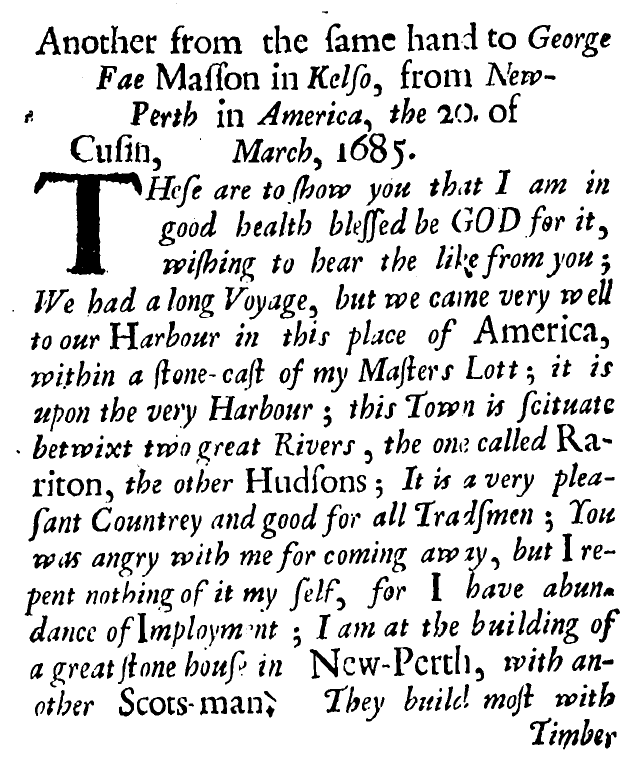
George Scot, in his promotional tract, The Model of the Government of the Province of East-New-Jersey, made particular use of two letters that Cockburn sent to Scotland in March 1685, within six months of his arrival. Scot’s intent was to counter accusations that accounts of East Jersey as a destination for emigrants were overblown by unnamed ‘Gentlemen’ to their own advantage, not that of the working man.

In these letters to his uncle James Brown, shoemaker, and George Fae [or Fall], a mason and freemason, both in Kelso, he extolled how pleasant a country he had found East Jersey to be, and how much work there was to be had by masons. He hoped his sister Katharin would join him and perhaps another relation called Francie.

Cockburn was Presbyterian but not a committed Covenanter. He expressed concern in his letter to his uncle, commenting that, “there is nothing discourages us more than want of Ministers” and hoped some would soon arrive from Scotland.

Cockburn found employment on his arrival alongside fellow immigrant John Hume, commissioned by merchant, David Mudie, to build ‘a big Stone house’. He continued to find plenty of work not just in East Jersey, such as repairing the Governor’s house in 1692, but also in New York where he was recorded as living in January 1695.

As an indentured servant he was entitled to a grant of ‘headland’ at the end of his contract and he petitioned the Board of Proprietors for this in August 1686. As skilled worker, he was entitled to a shorter term indenture and possibly a larger grant of land than the standard 30 acres.

Over time, Cockburn accrued more of a landholding in East Jersey, buying up the headlands of other indentured servants, such as those of Robert Anderson and brothers George and John Sharp brothers in 1694. Many preferred to pursue their trade unencumbered by property they would have to farm. In 1695 he held 220 acres around Newark and had property dealings in Perth Amboy.

John Cockburn is regarded as one of the first freemasons in Colonial America, along with the Quaker John Skene from the Newtyle family in Aberdeenshire who emigrated to West Jersey in 1682 and served as the colony’s Deputy Governor until 1688. Skene had been a member of the Aberdeen Lodge along with several other freemasons involved in the East Jersey project, including John Forbes who emigrated then returned home when he succeeded his brother to the family estate of Boyndlie in Tyrie, Aberdeenshire.


See database entry for John Cockburn

Read more

Stevenson, David, The First Freemasons: Scotland’s Early Lodges and Their Members (Aberdeen University Press, 1988), p116

George Scot, The Model of the Government of the Province of East-New-Jersey in America (Edinburgh: John Reid, 1685),  pp265-267 (reprinted in William A. Whitehead, East Jersey under the Proprietary Governments, 2nd edition, Newark: M.R. Dennis, 1875)

Cameron Alasdair Macfarlane, ‘“A Dream of Darien”: Scottish Empire and the Evolution of Early Modern Travel Writing’ (unpublished Doctoral thesis, Durham University, 2018)

Stevenson, David, The First Freemasons: Scotland’s Early Lodges and Their Members (Aberdeen University Press, 1988), p116

George Scot, The Model of the Government of the Province of East-New-Jersey in America (Edinburgh: John Reid, 1685),  pp265-267 (reprinted in William A. Whitehead, East Jersey under the Proprietary Governments, 2nd edition, Newark: M.R. Dennis, 1875)

Cameron Alasdair Macfarlane, ‘“A Dream of Darien”: Scottish Empire and the Evolution of Early Modern Travel Writing’ (unpublished Doctoral thesis, Durham University, 2018)


David Simson (c.1632–c.1686)

David Simson was an exiled Presbyterian minister and amongst the oldest Scots emigrants.

David Simson, a Scottish Presbyterian minister, was born around 1632 and served faithfully in parishes of Argyll for several decades before being exiled to East Jersey for his religious convictions.

He began his ministry in 1656 at Killean and Kilchenzie parish in South Kintyre, later moving to Kilcholumkill and Kilblaan or Southend parish, where in he was one of nearly four hundred ministers – one third of Scotland’s clergy – who were ‘outed’ from their parishes. They left either of their own volition or forced to leave and were required to live at least 20 miles from their former congregations. This was a consequence of the series of Acts that year passed by the Scottish Parliament. These forced the Church of Scotland to adopt Episcopalianism. Henceforth, ministers could only serve in a parish if a bishop or a patron (typically a local landowner) had nominated them, and all ministers were required to swear allegiance to the crown. King Charles II was seeking to introduce a common structure across all of Britain, with rule by bishops and standard use of the Book of Common Prayer.

Many outed ministers continued to preach, in people’s houses or in the fields. Penalties for hosting or preaching at such irregular and banned events known as conventicles could be severe.
Under an Act of Indulgence in September 1672, David was amongst 89 ministers allowed to return to their parishes, provided that they avoided political dissent, such as preaching against the King had power over the Church, and strove to maintain religious order within their parishes.

In March 1685, he was imprisoned in Edinburgh, accused of nonconformity. He was released on a heavy bond of 5,000 merks, on the condition that he leave Scotland and cease ministering while still in the kingdom. On 14 August 1685, the Privy Council ordered the return of his bond, clearing the way for him to board the Henry and Francis, a ship carrying scores of Covenanter prisoners to East Jersey.

Simson arrived in Perth Amboy in October 1685. He was one of several ministers exiled during this period, but his importation was specifically noted as having been arranged by Lord Neill Campbell, an important figure among the Scottish proprietors of East Jersey. Though he lived only a short while in the colony, dying around 1686, sources remember him as one who “continued stedfast in his principles till his death.”

He was married to Jean Thomson and was succeeded as minister in Southend parish by his son David in 1686. As the latter was performing as an episcopalian minister in 1688 when the Presbyterian church was restored to supremacy, he had to petition the Synod of Argyll to be received into Presbyterian Communion. In 1691 he became minister of Kilchoman parish on Islay.