Thomas Fullarton of Gallery (c.1655-1727)

From Montrose to East Jersey

Thomas Fullarton was born around 1655 in the parish of Montrose, Angus, one of the younger sons of John Fullarton of Kinnaber and Katherine Allardyce. This Kinnaber family had mercantile interests including lucrative rights to salmon fishing as far afield as Caithness.

Thomas and his brother Robert were amongst those Montrose merchants expressing interest in the potential of East Jersey. On 22 April 1684 they each received confirmation from Robert Barclay of a 1/10 of 1/48 shares in East Jersey. They witnessed each other’s purchase deeds along with their brother-in-law, Dr John Gordon of Collieston, an absentee investor, East Jersey agent and brother of emigrant Thomas Gordon. These three were at the heart of preparations for the voyage of the Thomas and Benjamin along with its master, Thomas Pearson, also from Montrose.

The brothers sailed from Montrose on 3 July 1684, accompanied by eighteen indentured servants. They arrived in Perth Amboy in October 1684 and wrote letters not long after to family members, published the next year in George Scot’s tract, The Model of the Government of East-New-Jersey. Their sister Helen was already in New Jersey, having sailed with her husband, John Skene for West Jersey in 1682. John came from the Skene of Newtyle family and was both a Quaker and a freemason. He was appointed Deputy Governor of West Jersey in October 1684.
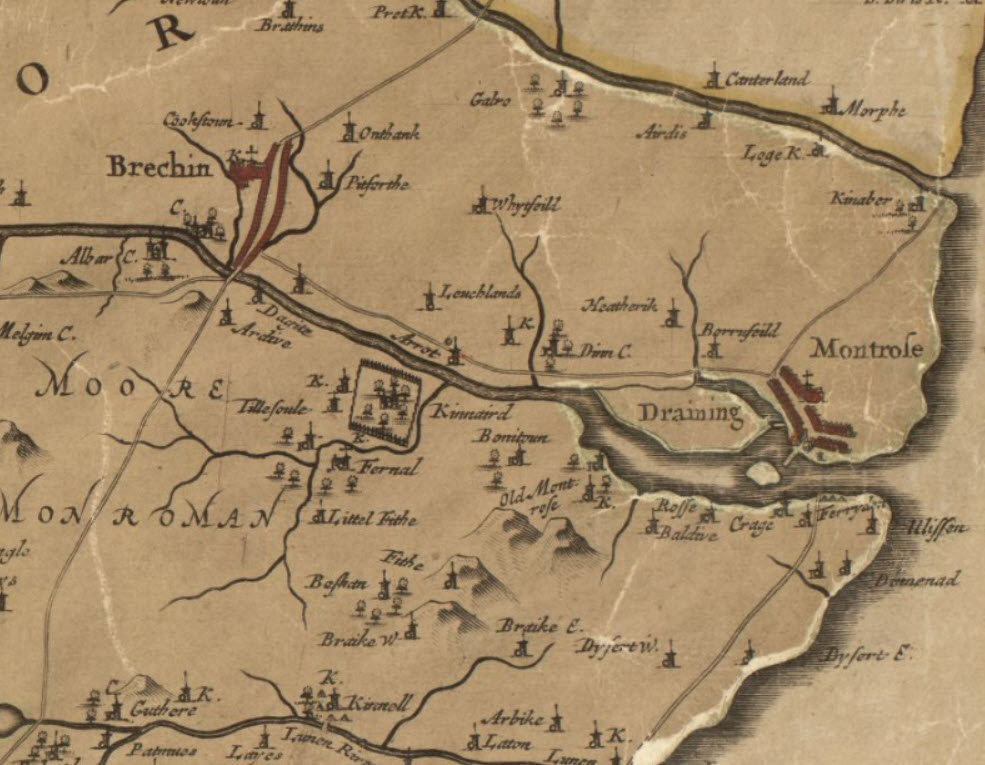
Montrose on 1678 map by Robert Edward
Montrose and Kinnaber on 1678 map, The Shire of Angus by Robert Edward. CC-BY NLS

The Fullartons in East Jersey and New York

Thomas and Robert were at sea when Robert Barclay as Governor of East Jersey commissioned them as proxies for absentee Proprietors, Thomas Barker and Thomas Hart, as part of the proprietorial group expected to deal with land rights and purchase – including from the Lenni-Lenape – and settle issues with settlers already in the province. Thomas obtained over 500 acres by the South River and Robert, an initial 300 acres at South Plainfield. Robert was also active in land development in New York province. There he was engaged as a surveyor in Ulster County, in one instance, in May 1686, on a tract of 797 acres that he would own. Both brothers served on the Board of Proprietors from April 1685 to 1687 (January in the case of Thomas and October for Robert).  

Robert died around the end of 1687 with Thomas inheriting his property in New Jersey and New York. Thomas subsequently benefitted from property dividends in their two names flowing from their rights as fractioners. Thus in October 1693, the Proprietors conveyed 670 acres and, in April 1702, 500 acres located by the Passaic River and Foulerton’s (ie, Fullarton’s) Brook.

Servants imported by Thomas Fullarton
Names of servants imported to East Jersey by Thomas Fullerton. NJSA A (EJ): Folio 187 (SSTSE023)

Onward to Barbados

Thomas had already left East Jersey, settling in Barbados by 1688, a consequence of his relationship with Thomas Rudyard who, in 1685, had made him executor of his property in Barbados, Jamaica, and England. Rudyard, a Quaker, had been a mercantile lawyer in London and advisor to William Penn in drafting the first Frame of Government (constitution) of Pennsylvania. Rudyard had earlier invested in a full share of West Jersey in 1676 before becoming First Purchaser of Pennsylvania in 1681 and then an East Jersey proprietor in 1682. Later in 1682 he was made Deputy Governor of East Jersey, holding the post until February 1684 when succeeded by Gawen Lawrie. In 1685 he left for Barbados where he died in 1692.

Thomas followed Rudyard to Barbados and took part in an expedition by acting Governor Barbados, Sir Edwyn Stede to St Lucia in 1688. This was occasioned by French encroachments on the territory claiming equal rights with the English to hunt, fish and cut wood.

Thomas would have been able to draw on Rudyard’s experience in developing a legal career. He was appointed Solicitor-General of Barbados on 31 October 1696 and on 10 August 1697 he acted as attorney for the executors of Governor Russell of Barbados. This was the day after he was admitted as a barrister to the Honourable Society of Lincoln’s Inn in London.

In Barbados in 1691 Thomas had married Joyce Sparke, the daughter of plantation owner John Sparke and Joyce Farmer. Their children, all born in Barbados, were Joyce, John, and Philip. Their mother died when they were very young.

Another Sparke daughter, Mary married Phillip Phillipse, son of Frederick Phillipse, the very prominent New York merchant involved in the slave trade. Phillip died in 1695 and Mary in 1698 leaving John Sparke’s Springhead plantation in the hands of Thomas Fullarton who assumed his wife’s half-share and was a guardian for Philip and Mary’s young son Frederick. He leased the property to major Barbados landowner Samuel Osbourne in 1710 who subsequently bought it.
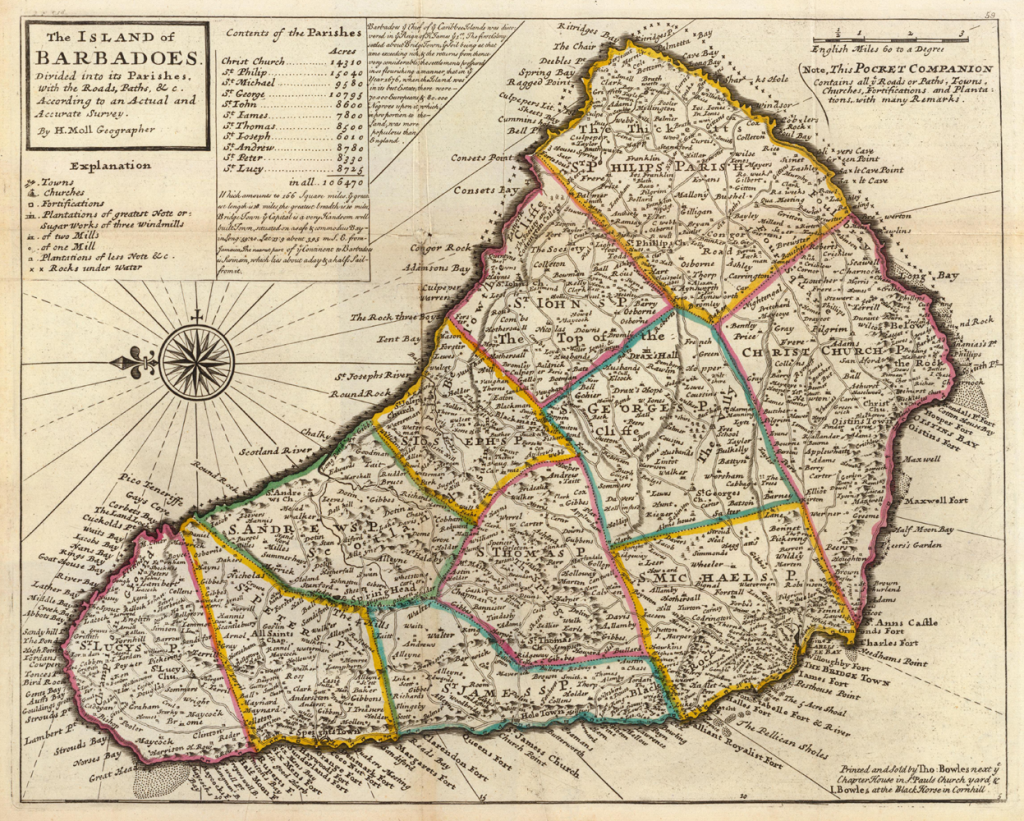
Map of Barbados by Herman Moll 1736
Map of Barbados by Herman Moll, from Atlas minor 1736. Credit: David Rumsey Historical Map Collection. https://www.caribmap.org/index.php?id=bdos&link=1736-barbados-moll&src=&sub=

In London

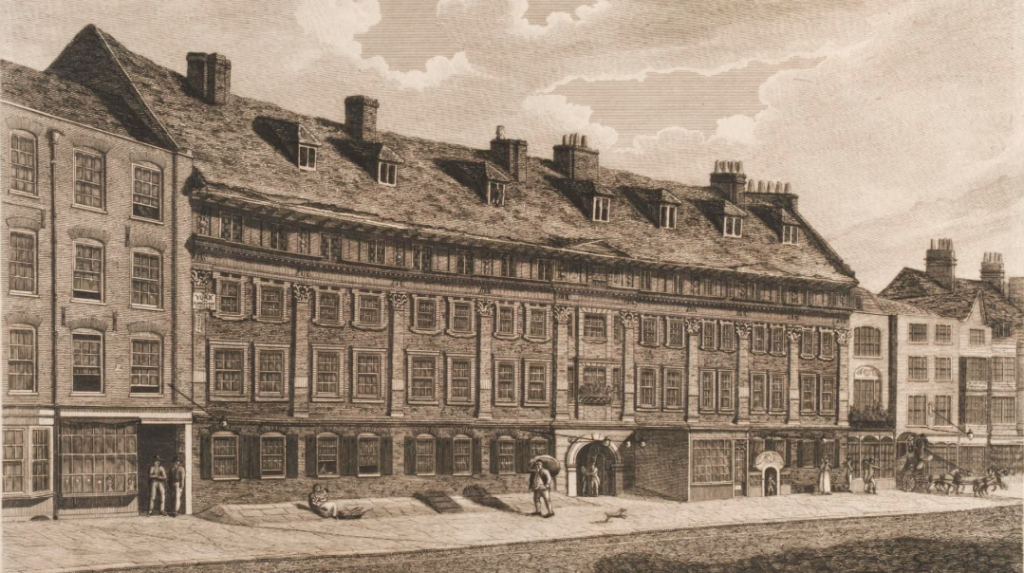
Furnival's Inn, Holborn
Furnival’s Inn, Holborn (1819) London Museum, CC BY-NC 4.0

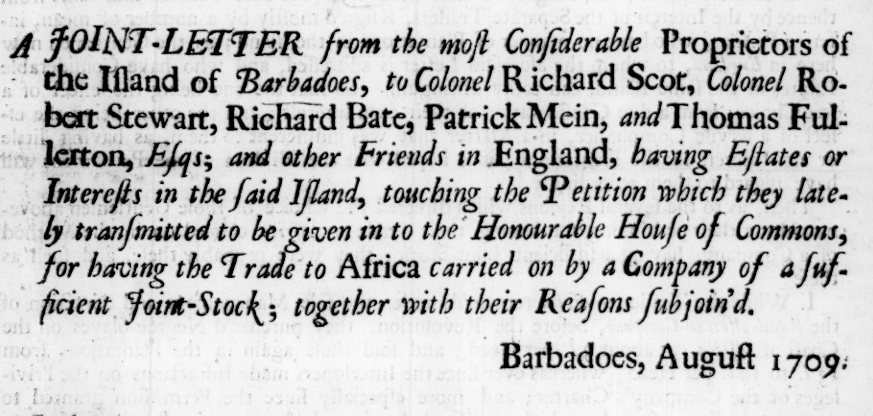
Thomas and his family were living in London by January 1704. There he represented the interests in Barbados, acting for his cousin, Alexander Skene (Secretary of Bermuda) and the estate of Lt Col John Farmer, his wife’s uncle. In December 1709 he was also one of several “friends in England having estates or interests” in Barbados who were called on by 77 plantation owners to support a parliamentary petition for reform of the 1698 Act opening the Africa trade, intended to allow the import of greater numbers of slaves.
Return to Scotland

With his accumulated wealth he was able to purchase several estates including Gallery (or Gallraw), Muchalls and Thornton. He thus became known as Thomas Fullarton of Gallery, occupying the house that had been built for Sir John Falconer of Balmakellie, Master of the Mint and brother of East Jersey investor, David Falconer. In 1726 he completed ownership of the lands of Hallgreen, Sillyflat, Whitefield, Johnshaven, and Balandra, purchased for the substantial sum of £49,000 Scots. The following year he set a tailzie (entail) on his properties to secure rights of inheritance for his descendants. Thomas’s assets contrasted with those of his elder brother, John Fullarton of Kinnaber, younger who had continued his father’s trade in barley and salmon but ended significantly in debt. Thomas died sometime after 1726, probably in Angus.


See database entry for Thomas Fullarton
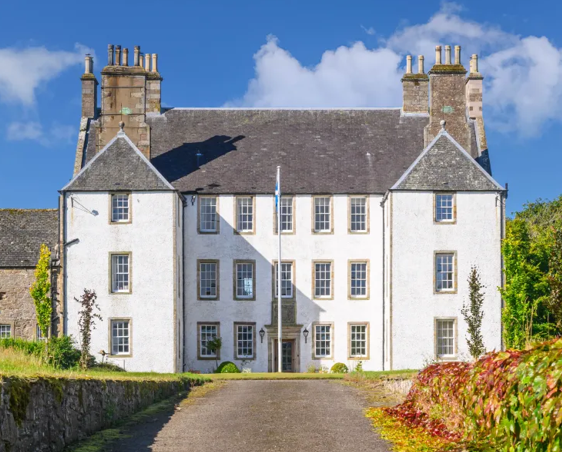
Approach to Gallery House
Approach to Gallery House. Source: Strutt and Parker sale particulars 2025


Gawen Drummond of Locharbor (1659–1724)

From a merchant family in Prestonpans

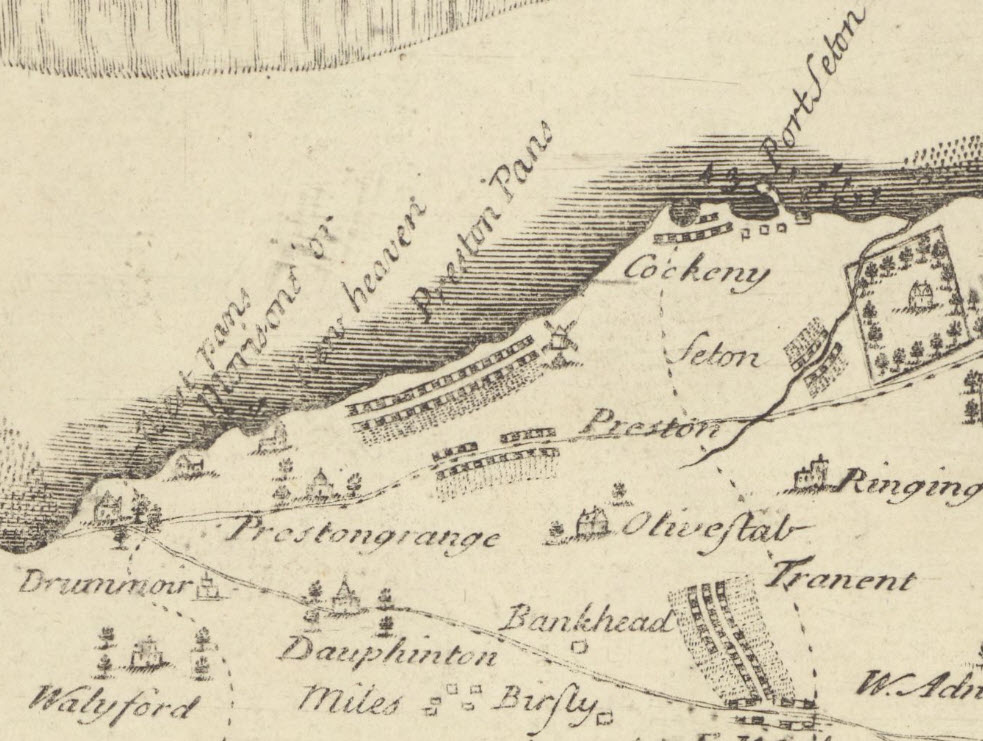
Gawen Drummond was born in 1659 in Prestonpans, East Lothian, the son of merchant Robert Drummond and Isabel Melvine. He was baptised on 19 June 1659, with George Makclaine and George Wallace acting as witnesses. By 1682, he was working as a merchant in Prestonpans. His elder brothers James and John were also merchants, John later becoming well-known as John Drummond of Newton, a prominent director of the New Mills Manufactory  in Haddington and of the Company of Scotland which promoted the Darien expedition) and Alexander, manager of the salt works in Prestonpans for the local laird, William Morison of Prestongrange.

An early ‘fractioner’

Gawen was one of the earliest of the so-called ‘fractioners’ to buy a share of East Jersey acquired by the Scots Proprietors. On 20 February 1681/82, he purchased the rights to 500 acres from his kinsman John Drummond of Lundin.

Accompanied by his nephew Robert and probably by his first wife and young children, he departed from Leith on 11 June 1684 aboard the Shield of Stockton and arrived at the Patuxent River, Maryland, on 29 September. From there they either went overland or coastal vessel to Perth Amboy.

Prestonpans on Adair map 1736

Establishing ‘Locharbor’

Gawen established an estate he called Locharbor in Monmouth County. In the “name & behalfe of the Governor & proprietors of East new Jersey”, he first arranged the purchase of land from three Lenni-Lenape sachems, Wanamassa, Wallammassekaman and Waywinelunce. The land was known to them surrounding Ulickaqueko, a “great pond”, bounded by a pine hill and a brook and tracts previously sold to Thomas Potter and Samuel White.

The price was one gun, five matchcoats (heavy winter coats), one kettle, and two pounds of powder. This was the procedure drawn up under the Concessions and Agreements of the colony whereby individual settlers were prohibited from buying land directly from Native Americans as sovereign individuals. Purchases had to be made in the name of the Proprietors, who would then issue warrants to develop the land, once cleared, to settlers. In Gawen’s case, this occurred on 19 March 1688/89, when he was granted a warrant to lay out 680 acres where he was “already settled”. Of this allocation, 80 acres was for his nephew Robert. In December 1688, Gawen purchased the 30-acre of headland of James Kilgour and in March 1688/89, a further 30 acres from James Crighton.

Clerk of the County Court

Gawen played a role in public life. In March 1701, he was Clerk of the Monmouth Court of Sessions, when dramatic events unfolded. During a case against pirate Moses Butterworth, a local mob seized Governor Andrew Hamilton, two deputies, the two justices, the Attorney General and Secretary as well as Gawen himself. This was during a period of opposition to the proprietorial rule of East Jersey and a factor precipitating the merger of East and West Jersey the following year.

Death and family

Gawen died sometime before 31 August 1724 when administration of his estate was granted to his son Gawen. An inventory dated 2 August 1728 valued his possessions at £136 14s 10d and included books and seafaring instruments. It is believed that he was buried at the Friends Meeting House Burial Ground in Shrewsbury, Monmouth County, although no gravestone survives.

His second wife was Mary Layton or Lawton, believed to be the daughter of William Layton and Violet Blackman, and born in Rhode Island or Middletown around 1668. Gawen’s children were Gawen, Robert, John, Isabel, Sarah, and Rebecca.


See database entry for Gawen Drummond


David Toschach of Monzievaird (c.1645-1689)

David Toschach, 7th of Monzievaird, led a party of 25 emigrants to East New Jersey in 1685 and set up a fur trading post in New York.

David Toschach [or Tosheoch] was born around 1645 in the parish of Monzievaird and Strowan, Perthshire into a minor landed family. He was the son of Andrew Tosheoch, 6th of Monzievaird, and Catherine Campbell, the daughter of Sir Robert Campbell of Glenorchy and Isabel Macintosh.

His family were burdened financially, dating back to his grandfather David’s decision in 1615 to mortgage their lands. Three years later this David was killed in Perth by Laurence Bruce of Cultnamundie and others, a consequence of a feud. The Tosheoch family petitioned the Privy Council for compensation, but this was not forthcoming until Bruce returned from exile 18 years later and only able to pay a small part of his original penalty. The next laird, Andrew was a Royalist whose lands were sequestered by Parliament in the 1650s though he gained political favour under King Charles II being appointed a Justice of the Peace in 1660 before dying in 1665.

David became 7th of Monzievaird when, in 1668, he inherited his father’s lands and the family debts. Matters came to a head when in 1674, he and his mother were pursued by John Graham of Balgowan for fulfilment of a heritable bond of 5,000 merks, annual interest of 300 merks, from the town and lands of Meckven. In the same year he also had money due to him arrested to pay another creditor, Francis Stewart.

Monzievaird was a supporter of his first cousin, Sir John Campbell of Glenorchy in his dispute with George Sinclair of Keiss over the earldom of Caithness, and took part in the Battle of Altimarlach on 13 July 1680 which took place near Wick in Caithness – the last clan battle in Scotland. In August 1683 Monzievaird was amongst those granted clemency for this by King Charles II. This group also included Captain Patrick McGregorie who was married to his sister Margaret.


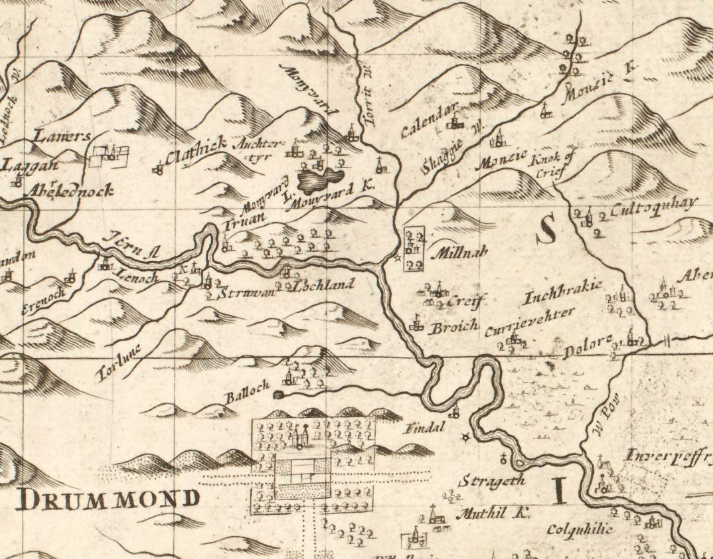
Extract from The Mapp of Straithern, Stormount, and Cars of Gourie, with the Rivers Tay and Jern by John Adair, 1720
Extract from The Mapp of Straithern, Stormount, and Cars of Gourie by John Adair (1683 survey) showing ‘Monyvard’. CC_BY National Library of Scotland

The move to East Jersey

In March 1684, he purchased a quarter of the share of East New Jersey held by James, Earl of Perth, for £250, thus becoming one of the so-called ‘fractioners’. He was also listed as one of 29 agents in a pamphlet published in 1684 to attract tradesmen and farm servants to join the colonial venture. He led a party of emigrants including his wife Jean Campbell, the McGregories and their children, and about 15 others who sailed for East Jersey aboard the Shield of Stockton in July 1684. He also contracted with the Privy Council to carry three thieves from Stirling Tolbooth. The ship arrived at the Patuxent River in Maryland on 29 September and the passengers had to travel 100 miles overland or by coastal craft to Perth Amboy.

Monzievaird was quickly disillusioned with his situation in East Jersey. He failed to obtain the specific area of land he wanted and wrote to the Earl of Perth in March 1685 asking for his money back. He complained of being treated badly by the “chifts and cheats” of Quakers. Knowledge of this letter led the Board of Proprietors to prepare a rebuttal.

Monzievaird was very conscious of his first-born social status – in contrast to the younger sons of landed gentry amongst the emigrants – and he appears in the New Jersey records as  ‘The Laird of Minivaird’. He may have had misplaced illusions about his likely life in East Jersey, suggested by his insistence in December 1684 that John Campbell (possibly a Perthshire relative of his wife’s) provide him with a “footman in velvet” to serve him when he attended a meeting of the Proprietors in Perth Amboy.

Onward to New York

Monzievaird’s frustrations led him on 15 July 1685 to sell his East Jersey share to Montrose merchant David Mudie, who provided a bond to guarantee the sale. By 22 June 1686, Monzievaird was resident in New York City.

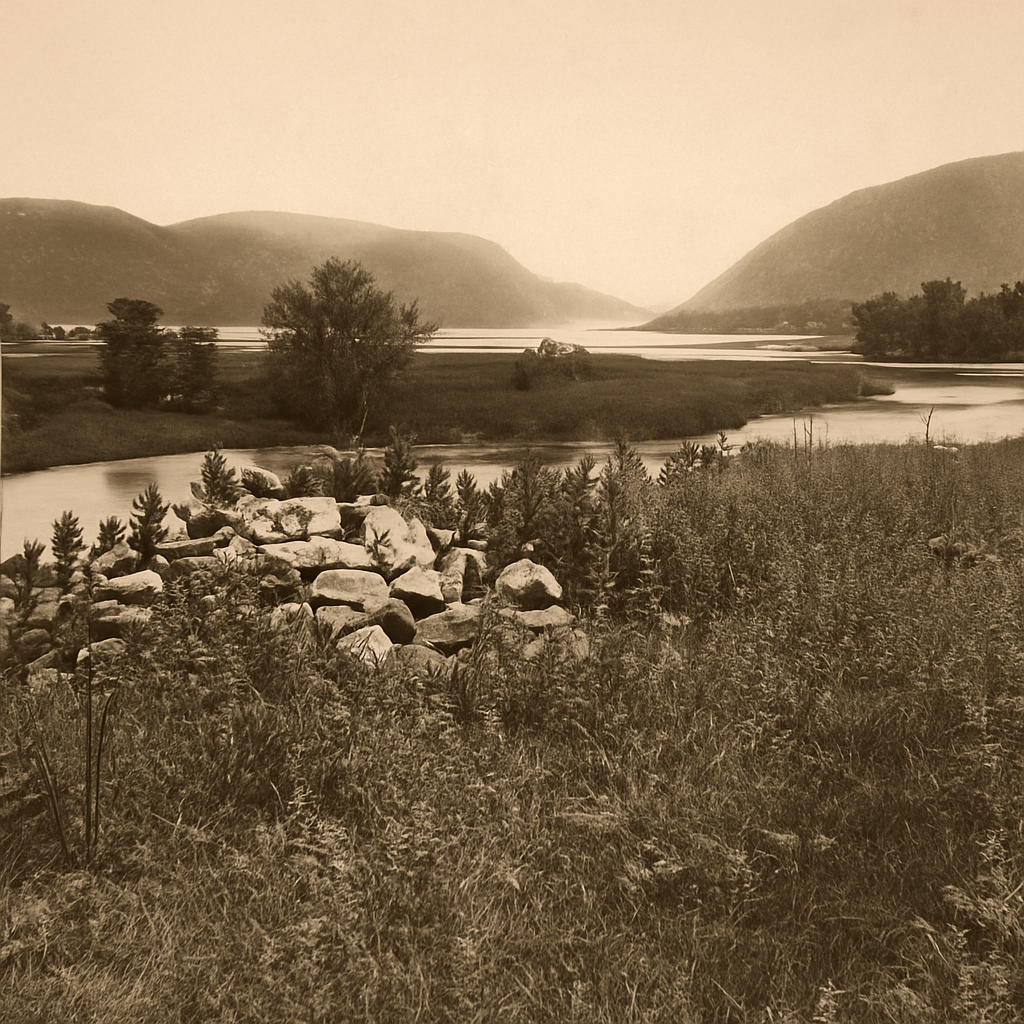
Monzievaird and his brother McGregorie obtained land at Moodna (or Murderer’s) Creek on the Hudson River where they established a fur trading outpost. (This area later became New Windsor, Orange County, New York). McGregorie was called away on several occasions – his military skills were highly valued by the New York Governor – so it was left largely to Monzievaird and others in his party to develop the new operation.

Mozievaird died just before 3 December 1689 at Moodna, on which date his servant Daniel Maskrig was instructed to deal with his belongings and settle his accounts. There were concerns that his estate was at risk of embezzlement, presumably by other residents at Moodna who had been part of the Monzievaird party.

Monzievaird’s and McGregorie’s wives and families were left in a precarious predicament, as no patent had been secured on the land. They were subsequently forced to become leaseholders and there followed a long legal saga before their rights were reinstituted.

Moodna Creek photograph, 1870s
Moodna Creek in the 1870s. Photo from ‘Shades of Cornwall Past’ Facebook Group

Family fortunes in Scotland

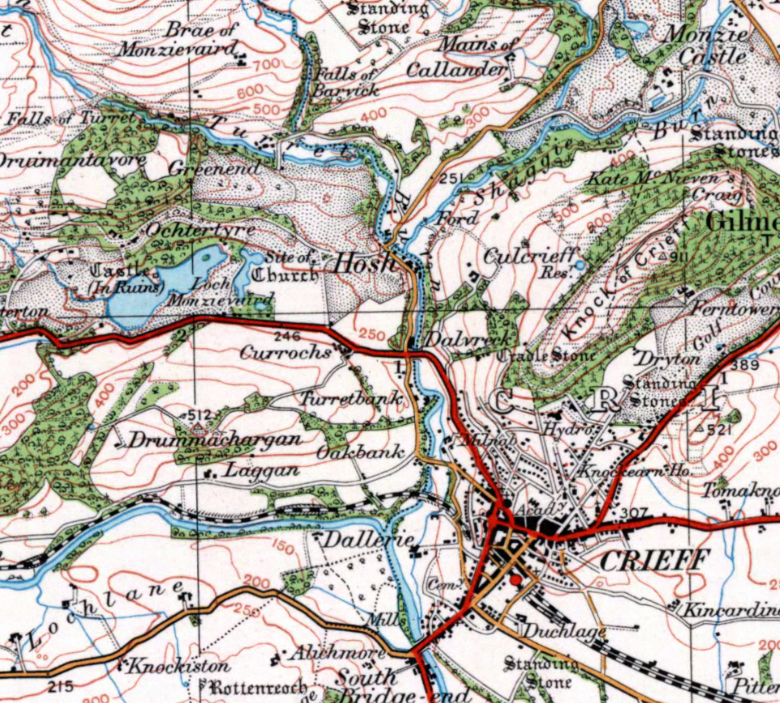
Map showing Loch Monzievaird relative to Crieff on a 1930 OS map
Map showing Loch Monzievaird relative to Crieff on a 1930 OS map. CC_BY National Library of Scotland

Monzievaird may have hoped that his investment in East Jersey would help restore the family fortunes back in Scotland. Before he left Scotland he transferred the lands of Monzievaird to his brother Duncan, a merchant in Edinburgh. The property continued to be a burden and Duncan was very glad to sell it in 1700 to Sir Patrick Murray of Ochtertyre. It was the opinion of the senior local landowner, John, Earl of Breadalbane, that the property “was verie well sold, and it is not worth soe much to any man in Scotland as Ochtertyre did & will pay for it, unless I were rich to redeem it only for the antiquities thereof, which is not likely that ever I do.”


See database entry for David Toschach


William Ridford (c.1642–1726)

William Ridford [or Reidford] was one of the first Scots emigrants to East Jersey in the 1680s. He was born around 1642 in Friershaw, near Lilliesleaf in Teviotdale, Roxburghshire. He was a Quaker, a member of the Kelso Monthly Meeting.

By 1682, tenant farmer Ridford was in negotiation with Arent Sonmans, one of the East Jersey proprietors, to emigrate to the American colonies. Under their agreement, Ridford was promised 100 acres of land in East Jersey rent-free for ten years, a significant incentive.

Ridford left Scotland from Aberdeen aboard the Exchange of Stockton on 31 August 1683. After a transatlantic crossing, he arrived in Staten Island, New York, on 19 December 1683. He and his family (his wife Margaret and their seven children) initially settled in Elizabethtown, New Jersey. On 26 September 1685, the family was granted a survey warrant for 250 acres of headland, recognising their arrival and settlement.

Ridford had joined the Kelso Monthly Meeting sometime before 1682 and was to remain a Quaker until his death.

Later records show Ridford in Freehold, Monmouth County, where he was still farming as a yeoman by 1720. He maintained his Quaker faith throughout his life, leaving a legacy to the Monmouth Meeting of Friends in his will.

William Ridford died in 1726 and was buried in the Old Scots Burying Ground in Freehold. His will, dated 27 February 1720/21, named his wife Margaret and sons-in-law Gideon Craford and James Lowrey (Lawrie) as executors, though Margaret later declined due to infirmity. His property and legacies, including his religious bequests, testify to a life of persistence, belief, and quiet influence in early East Jersey society.


See database entry for William Ridford